
June 29, 2026
How to Furnish an Airbnb: A Room-by-Room Guide
By Shaun Ghavami
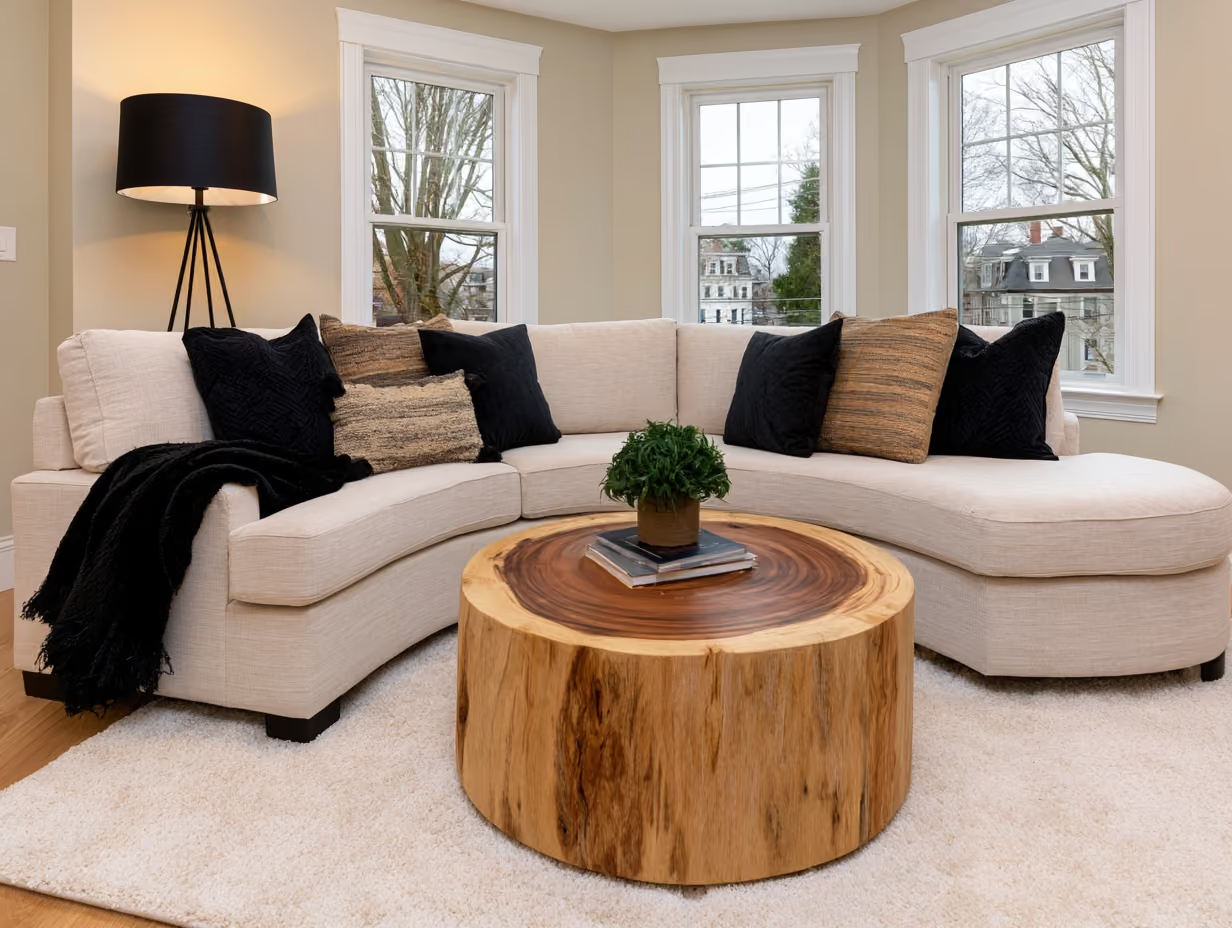
To furnish an Airbnb, start with the pieces guests touch most (the bed, the sofa, the kitchen) and buy durable, easy-to-clean versions of each, then add lighting, soft textiles, and a few personal touches that photograph well. Work room by room so you do not overspend in one area and run out of budget for another. A simple, well-stocked one-bedroom usually runs a few thousand dollars at the budget tier and climbs from there with quality and property size. The goal is a space that looks great in photos, survives back-to-back guests, and earns the kind of reviews that keep your calendar full.
You do not need to own the property to do this well. If you are co-hosting an Airbnb or running rental arbitrage, the furnishing playbook is the same: you are building a space that books, holds up, and turns first-time guests into five-star reviews.
Set your budget before you buy anything
Furnishing costs vary a lot by property size, market, and the quality level you target. Based on 2026 industry breakdowns, a one-bedroom typically falls into three tiers:
| Tier | One-bedroom total | Best for |
|---|---|---|
| Budget | $3,500 to $7,000 | Lower nightly rates, simple markets, testing a unit |
| Mid-range | $8,000 to $18,000 | Most hosts, strong reviews, solid durability |
| Premium | $18,000 to $40,000+ | Higher-end markets, design-led listings |
For larger homes, plan on roughly $2,500 to $6,000 per additional bedroom depending on your tier. One useful rule of thumb from rental setup pros: budget around 8% to 12% of your expected first-year gross revenue on furnishing. If a unit should gross $60,000 in year one, a furnishing budget in the $5,000 to $7,000 range is reasonable for a starter setup.
A rough way to split a one-bedroom budget: about 30% to the bedroom (the mattress and bedding come first), 25% to 30% to the living room, and the rest spread across the kitchen, bathroom, and any workspace.
The golden rule: buy for durability, not for your own taste
Your Airbnb furniture takes more abuse in a year than your home furniture takes in five. Spills, rolling suitcases, kids, pets, and people who do not treat the place like their own. Durable, easy-to-clean pieces beat trendy ones every time because they cut your replacement and cleaning costs over the life of the unit.
A few buying rules that hold up:
- Hard surfaces: favor solid wood, metal, or tempered glass over particleboard and cheap veneer.
- Upholstery: choose performance fabrics like Olefin or tightly woven microfiber. They resist stains and wear far better than untreated cotton or linen.
- Skip leather and faux leather sofas: they crack, peel, and are hard to keep looking clean under heavy use.
- Washable covers win: a sofa or chair with removable, washable covers saves you the day you find a red-wine stain at checkout.
- Neutral base, color in the cheap stuff: keep big-ticket items neutral, then add personality with throw pillows, art, and rugs you can swap cheaply.
Bedroom: this is where reviews are won
A great night's sleep is one of the most-mentioned details in five-star reviews, so the bed earns the biggest slice of your budget. Do not cut corners here.
- Mattress: a medium-firm mattress at least 8 inches thick suits the widest range of guests. Memory foam tends to outlast spring mattresses in a rental because there are no coils to break down or squeak.
- Protectors: a waterproof mattress protector and pillow protectors are non-negotiable. They are cheap insurance against the one guest who ruins a mattress.
- Linens: buy white or neutral sheets in multiples so you can bleach, rotate, and always have a clean set ready during turnovers. Keep at least two full sets per bed.
- Layers: a duvet with a washable cover, a few quality pillows in different firmnesses, and an extra blanket guests can reach for.
- Blackout: blackout curtains or shades matter more than almost any decor choice. Guests remember a dark, quiet room.
- Bedside basics: a lamp on each side, a charging point within reach, and a small surface for a phone and a glass of water.
Living room: comfort plus camera-ready
The living room is the second-biggest investment and often the first photo guests see. The sofa is the workhorse, so buy one that can take traffic and clean up easily. A sectional or sofa with washable covers in a performance fabric is the safe pick.
- Seating for the listing's max occupancy: if you sleep six, six people need somewhere to sit together.
- Layered lighting: rely on lamps and dimmable fixtures rather than a single overhead light. Lighting control is one of the easiest ways to make a room feel warm and look good in photos.
- A real coffee table and side tables: guests need places to set drinks, laptops, and remotes.
- A rug to anchor the space: a washable or low-pile rug defines the area and warms up hard floors.
- A smart TV with clear instructions: guests expect to log into their own streaming accounts. A one-card guide saves you support messages.
Kitchen: stock it like a guest, not a host
You do not need designer kitchen furniture. A dining table just needs to be tough and wipe-clean; you can dress it up with a runner and a couple of simple pieces. What guests actually rate is whether the kitchen is genuinely usable.
Stock the essentials guests reach for:
- Pots, pans, and a sharp knife or two that actually cut
- Plates, bowls, glasses, and mugs for at least your max occupancy, plus a few spares
- A full set of cutlery and basic cooking utensils
- A coffee maker (and clear instructions), a kettle, and a toaster
- Starter supplies: salt, pepper, oil, dish soap, sponges, paper towels, trash bags, and a few coffee filters or pods
Reliable Wi-Fi belongs on the same priority level as running water. For most guests, slow Wi-Fi reads the same as no Wi-Fi, and it shows up in reviews fast. Post the network name and password somewhere obvious.
Bathroom: punch above your spend
The bathroom is a cheap place to feel expensive. A few smart choices read as boutique-hotel without a big bill.
- Neutral towels you can bleach: buy quality white or neutral towels in multiples so you can keep a clean set per turnover and bleach out stains.
- Refillable dispensers or quality minis: shampoo, conditioner, and body wash that do not run out mid-stay.
- The extras guests forget: a hair dryer, extra toilet paper in plain sight, a plunger, and a small first-aid kit.
- Layered lighting and a clean mirror: good light at the mirror is the difference between a bathroom that photographs well and one that does not.
The amenities that earn their keep
Some additions pay you back in higher rates, longer stays, or better reviews. A few worth weighing:
- Going pet-friendly: Vacasa data shows pet-friendly homes can earn as much as 15% more income and see roughly 9% higher occupancy, and pet bookings tend to run longer. Only about a quarter of Vacasa's listings allow dogs, so it is a real way to stand out. Add a washable rug, a lint roller, and clear pet rules if you go this route.
- Workspace: a small desk, a comfortable chair, and that strong Wi-Fi capture remote workers and longer stays.
- Local touches: a piece of local art, a guidebook of your favorite nearby spots, or a welcome note costs little and shows up in reviews.
- Outdoor seating: even a small balcony with two chairs and a table reads as extra living space in photos.
Common furnishing mistakes to avoid
- Cramming in too much furniture. Over-furnished rooms feel small and photograph as clutter. Leave breathing room.
- Decorating for yourself. Bold themes, heavy personal decor, and busy artwork narrow your appeal. Neutral palettes with a few accents reach the widest set of guests.
- Reusing leftover home furniture by default. Hand-me-downs that do not match the comfort and style guests expect drag down the whole space. Replace anything tired or mismatched.
- Skimping on the bed. A cheap mattress or thin sheets shows up in reviews quickly and is expensive to fix later.
- Weak lighting. A single overhead bulb makes rooms feel cold and flat in photos. Layer lamps and dimmers.
- DIY listing photos. Smartphone snaps no longer cut it. Staged, professional photos consistently pull more interest than empty or poorly lit rooms.
Style it for the camera (because that is what books)
Most guests choose your place from a phone screen before they ever read the description. Once the furniture is in, style each room and get it photographed properly.
- Make the bed crisp, with layered pillows and a clean duvet.
- Clear every surface, then add one or two simple props (a plant, a stack of books, a tray).
- Shoot in natural light, ideally near golden hour, with lamps on for warmth.
- Capture each room from a few angles and lead your listing with the strongest, most inviting shot.
- Bring in a little life with a real plant or fresh flowers. It reads as cared-for.
A simple order of operations
- Set your total budget and split it by room.
- Buy the bed and bedding first, then the sofa.
- Outfit the kitchen and bathroom with the essentials guests expect.
- Add lighting, rugs, and soft textiles to warm everything up.
- Layer in a few local touches and high-value amenities.
- Style every room and book a professional photographer.
- Live in the space for a night yourself and fix whatever annoys you. Your first guest will notice the same things.
Furnish for durability, spend where guests sleep and gather, and treat your photos as the product. Do that, and a well-furnished unit pays you back through higher occupancy, stronger reviews, and the freedom to charge what the space is worth.
Furniture only pays off once a guest actually books it, so put the same care into describing it well in your listing, and if animals will be staying too, the durable choices here line up with furnishing for pet friendly guests.
Once the room is furnished, the styling choices become part of your Airbnb interior design, and both feed directly into how you optimize your Airbnb listing for bookings.
Furnishing decisions give you the words to sell with, and I turn those into headlines in listing title ideas.
Frequently asked questions
How much does it cost to furnish a one-bedroom Airbnb?
A one-bedroom Airbnb typically costs $3,500 to $7,000 at the budget tier, $8,000 to $18,000 at mid-range, and $18,000 to $40,000 or more at the premium level, according to 2026 industry breakdowns. Your final number depends on property size, market, and the quality you target. A common rule of thumb is to budget 8% to 12% of your expected first-year gross revenue on furnishing.
What should I buy first when furnishing an Airbnb?
Buy the bed and bedding first, then the sofa, because those are the pieces guests use most and mention most in reviews. A great night's sleep is one of the most cited details in five-star reviews, so a medium-firm mattress at least 8 inches thick, quality protectors, and multiple sets of neutral linens earn their cost quickly. After the bed and sofa, outfit the kitchen and bathroom essentials before adding decor.
What furniture is most durable for a short-term rental?
The most durable rental furniture uses solid wood, metal, or tempered glass for hard surfaces and performance fabrics like Olefin or tightly woven microfiber for upholstery. Pieces with removable, washable covers hold up best because you can clean stains instead of replacing the item. Avoid real and faux leather sofas, which crack and peel under heavy guest use.
Do I need to own the property to furnish and run an Airbnb?
No, you do not need to own the property to furnish and operate an Airbnb. Co-hosts and rental arbitrage operators furnish and manage spaces they do not own, and the furnishing approach is identical: buy durable, easy-to-clean pieces, prioritize the bed and living areas, and style the space for photos. The main difference is getting the owner's permission and aligning on the budget and design.
What amenities help an Airbnb earn more?
Reliable high-speed Wi-Fi, a well-stocked kitchen, quality bedding, and a usable workspace are the baseline amenities guests expect and reward. Going pet-friendly can raise income by as much as 15% and occupancy by roughly 9%, per Vacasa, and relatively few listings allow dogs, so it is a strong differentiator. Local touches and outdoor seating also show up positively in reviews.

.png)
Be Part of our Community.
Let’s transform properties into powerhouses.
