
July 13, 2026
Do Airbnbs Allow Pets? A Host's Guide to Pet-Friendly Listings
By Shaun Ghavami
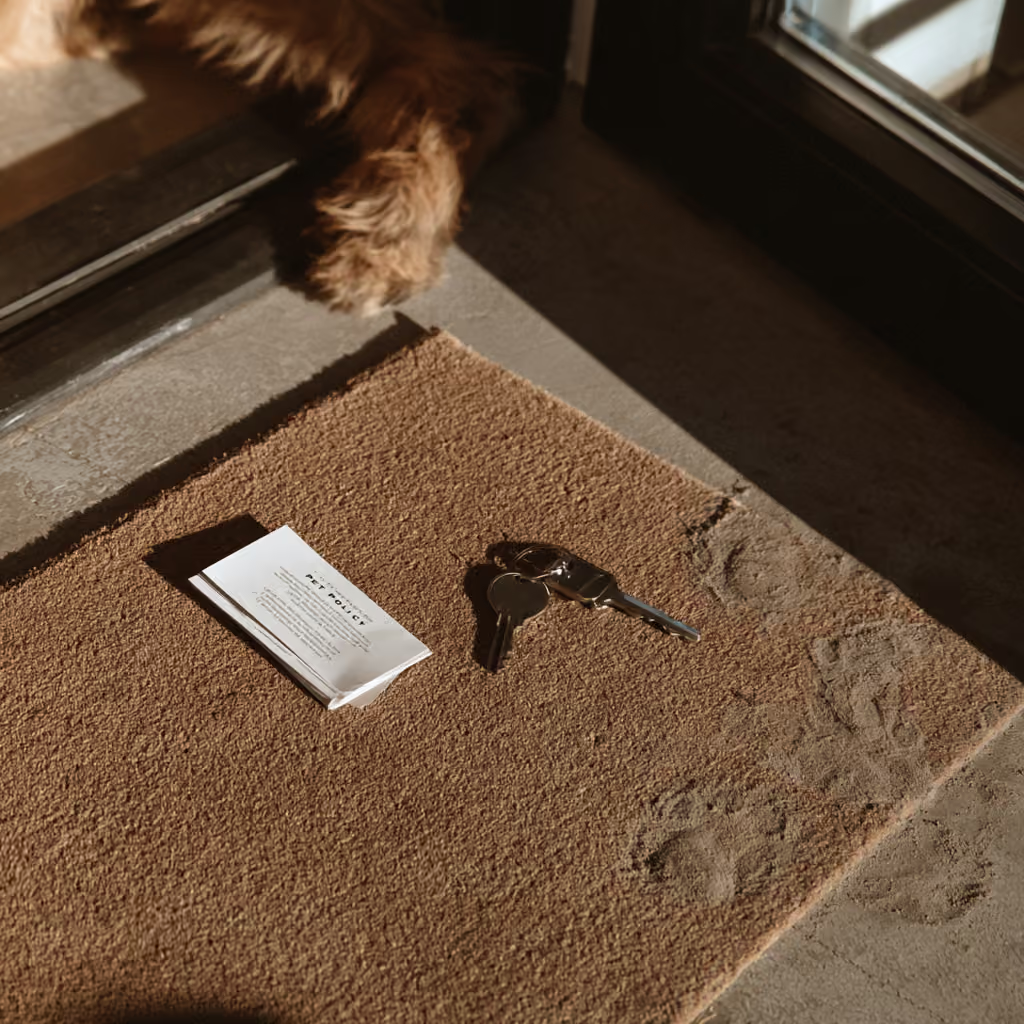
Some Airbnbs allow pets and some do not, because each host chooses. Airbnb lets you decide in your house rules whether guests can bring pets, up to five per stay, and you can add a pet fee to cover the extra cleaning. Guests who travel with animals filter for pet-friendly listings, so saying yes opens you to a market that most hosts turn away. Service animals are a separate matter: Airbnb treats a service animal as not a pet, so you generally cannot refuse one or charge a pet fee for it. This guide covers the pros and cons, how to set a fair pet policy, the service-animal rule, and a simple way to decide.
In my business I have hosted more than 3,000 guests, and pet stays have been some of the smoothest bookings I have taken, plus a few of the messiest. The difference is almost always the policy you set before the pet arrives. Get the rules and the fee right and pet-friendly hosting can raise your income with less competition. Get them wrong and you pay for it at turnover.
Do Airbnbs allow pets? The short answer
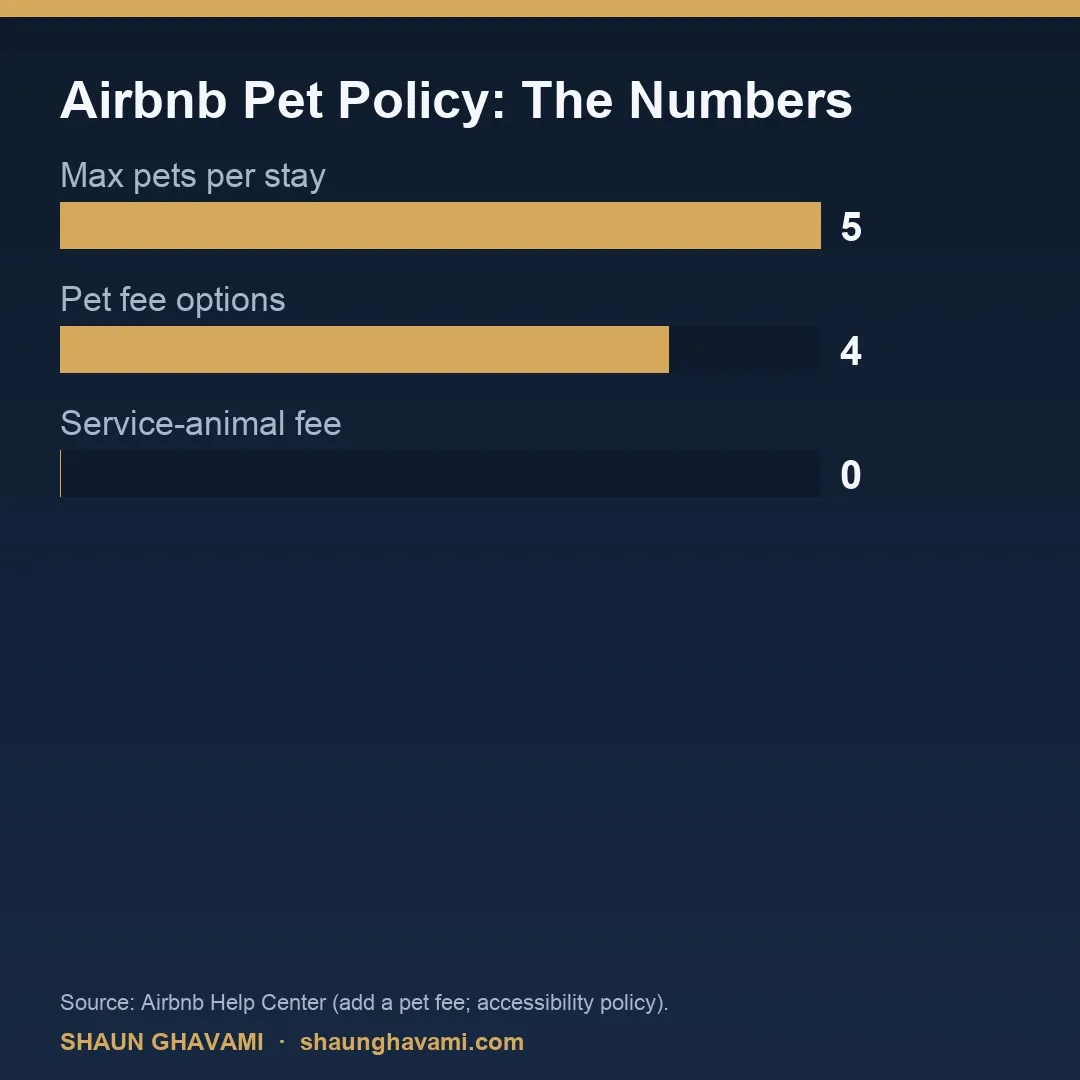
It is the host's choice. Airbnb gives every host a switch: allow pets or not. When you allow them, guests can indicate they plan to bring zero to five pets at booking, and your house rules tell them what is and is not okay. If your listing says no pets, guests without an assistance animal are expected to leave theirs at home. So the honest answer to "do Airbnbs allow pets" is that many do, many do not, and you get to decide which kind of host you are.
The case for allowing pets
A bigger market. Plenty of travelers will not leave a dog behind, and far fewer listings welcome pets than the number of people searching for them. Allowing pets puts you in front of guests who have fewer options and book faster.
Higher effective rates. A pet fee lets you charge for the real cost of a deeper clean while staying competitive on the nightly price. Pet owners expect to pay a little extra and rarely blink at it.
Less competition and loyal repeat guests. Pet-friendly travelers remember the places that made them welcome. They come back, and they tell other pet owners where to book.
The case against allowing pets
More cleaning. Hair, dander, and the occasional accident add time to every turnover. If your cleaner charges more for pet stays, build that into the fee.
Wear and damage. Scratched floors, chewed furniture, and stains happen. Durable materials and clear rules limit the risk, but it never drops to zero.
Allergies for future guests. Dander lingers. A guest with allergies who books right after a pet stay can have a rough night, so honest turnover cleaning matters.
Does pet-friendly hosting actually pay off?
From what I have seen across the properties I help manage, the answer is usually yes, with conditions. Pet-friendly listings tend to fill dates that pet-free listings leave empty, because a traveler with a dog has a shorter list of places that will take them. That scarcity works in your favor on both occupancy and nightly rate.
The payoff shrinks fast if your turnover is not ready for it. One rushed clean that leaves hair on the couch can cost you a five-star review and lose the allergy-sensitive guest who books next. So treat pet-friendly as a small operational upgrade, not just a checkbox: a slightly deeper clean, a fair fee, and durable materials. Done that way, it is one of the lowest-effort ways I know to widen your guest pool without spending a dollar on marketing.
How to set an Airbnb pet fee
Airbnb builds pet fees into your pricing rather than tacking on a surprise charge. According to Airbnb's help article on adding a pet fee, when you set a pet fee it shows both as part of the nightly rate and in the total price at checkout. You can structure it four ways: a flat fee per booking, per night, per pet, or per pet per night. Airbnb's guidance is direct about the purpose: pet fees should only be used to cover the cost of the expected cleaning you would do after hosting animals.
My rule of thumb is to price the fee to match your real extra cleaning cost, not to punish pet owners. Overcharging pushes guests toward hosts who do not, and you lose the edge that made pet-friendly worth it. If you are still setting your base numbers, my guide on how to price your Airbnb pairs well with this, and the Airbnb cleaning fees breakdown shows where a pet fee fits alongside your standard turnover charge.
How to make your listing pet-friendly
Turning pets on is more than a setting. If you want the bookings that come with it, make it obvious you welcome animals.
Small touches like these separate a listing that tolerates pets from one that markets to them, and the second books faster.
Want the full hosting playbook? Shaun teaches pricing, operations, and the co-hosting model inside 10XBNB. Get the free Airbnb co-hosting training
Service animals are not pets
This is the part hosts get wrong most often, and it matters legally. Per Airbnb's accessibility policy, a service animal is not a pet. Even if your listing has a no-pets rule, you must allow a guest's service animal to accompany them unless you have been granted an exemption, and you cannot charge a pet fee or a cleaning fee for animal hair or dander because of that service animal.
Saying you welcome pets in the title itself filters guests before they even open the page, and I show how in Airbnb title ideas that work.
Airbnb's policy also addresses emotional support animals. Where local law requires you to accommodate one, you cannot treat that emotional support animal as a pet either. The practical takeaway: keep your pet fee and pet limits for actual pets, and handle service animals as an access requirement, not a booking add-on.
How to write your pet rules
Clear rules prevent almost every pet problem. Spell out, in your house rules, exactly how you expect animals to be treated in your space:
Put these in writing before you switch pets on. My walkthrough on Airbnb house rules shows how to phrase them so guests actually read and follow them.
When a pet causes damage
Most pet stays end without a mark. For the few that do not, handle it the same calm way you would handle any damage.
A clear pet fee and written pet rules make these cases rare and easy to resolve, because you set the expectation before the pet ever arrives. This is also why durable furnishings pay for themselves over a busy season.
Should you allow pets? A quick framework
Run your place through this before you decide. If most rows point to yes, pet-friendly is likely a win for you.
Your situationLeaningDurable, washable floors and furniture, easy to deep cleanYesLocated near parks, beaches, trails, or road-trip routesYesReliable cleaner who can handle pet turnoversYesDelicate furnishings, carpet everywhere, or a strict HOA on petsNoYou or future guests have serious allergies you cannot manageNoYou cannot commit to a deeper clean after animal staysNo
Pet-proofing overlaps with smart setup in general. Washable rugs, sealed floors, and sturdy furniture help, and my guides on furnishing an Airbnb and the best Airbnb amenities point to choices that survive both kids and dogs. When it is time to reset the space, follow my how to clean an Airbnb checklist so dander does not carry into the next stay.
A pet-policy checklist
Pets are one operations decision among many. The full how to start an Airbnb business guide ties your pet policy into pricing, cleaning, and guest experience so the whole listing works together.
Pets add wear a listing has to survive, so pair your pet policy with a mattress that holds up, and be upfront about the policy when writing your listing description.
Pet-friendly design choices tie directly into the wider Airbnb interior design decisions you make for the whole space, and allowing pets is one lever worth weighing when you optimize your Airbnb listing.
Frequently asked questions
Do all Airbnbs allow pets?No. Allowing pets is the host's choice, and many listings do not. When a host allows pets, guests can indicate zero to five pets per stay and must follow the listing's pet rules. Travelers with animals filter specifically for pet-friendly listings.
Can Airbnb hosts charge a pet fee?Yes. Airbnb lets you add a pet fee that appears in the nightly rate and the total price at checkout, structured per booking, per night, per pet, or per pet per night. Airbnb says the fee should only cover the expected extra cleaning after hosting animals.
Are service animals allowed even if my listing says no pets?Yes. Airbnb's accessibility policy states that a service animal is not a pet. You must allow a guest's service animal unless you have an exemption, and you cannot charge a pet fee or a cleaning fee for animal hair or dander for that service animal.
How many pets can a guest bring to an Airbnb?When a host allows pets, guests can indicate zero to five pets at booking. You can set your own limit within that range in your house rules.
What is the difference between a pet and an emotional support animal on Airbnb?Airbnb treats service animals as not pets. For emotional support animals, where local law requires you to accommodate one, Airbnb's policy says you cannot treat that animal as a pet either. Regular pets remain subject to your pet fee and pet limits.
Is allowing pets worth it for hosts?It can be. Pet-friendly listings reach a larger, faster-booking market with less competition, and a pet fee covers the extra cleaning. It works best when your space uses durable, washable materials and you can commit to a deeper turnover clean.
Ready to build a booked-out, well-run Airbnb? Shaun shares the operations and co-hosting system that got him 1,000+ five-star reviews. Start the free Airbnb co-hosting training

.png)

Be Part of our Community.
Let’s transform properties into powerhouses.
