
June 29, 2026
How to Clean an Airbnb: My Turnover System for 5-Star Reviews
By Shaun Ghavami
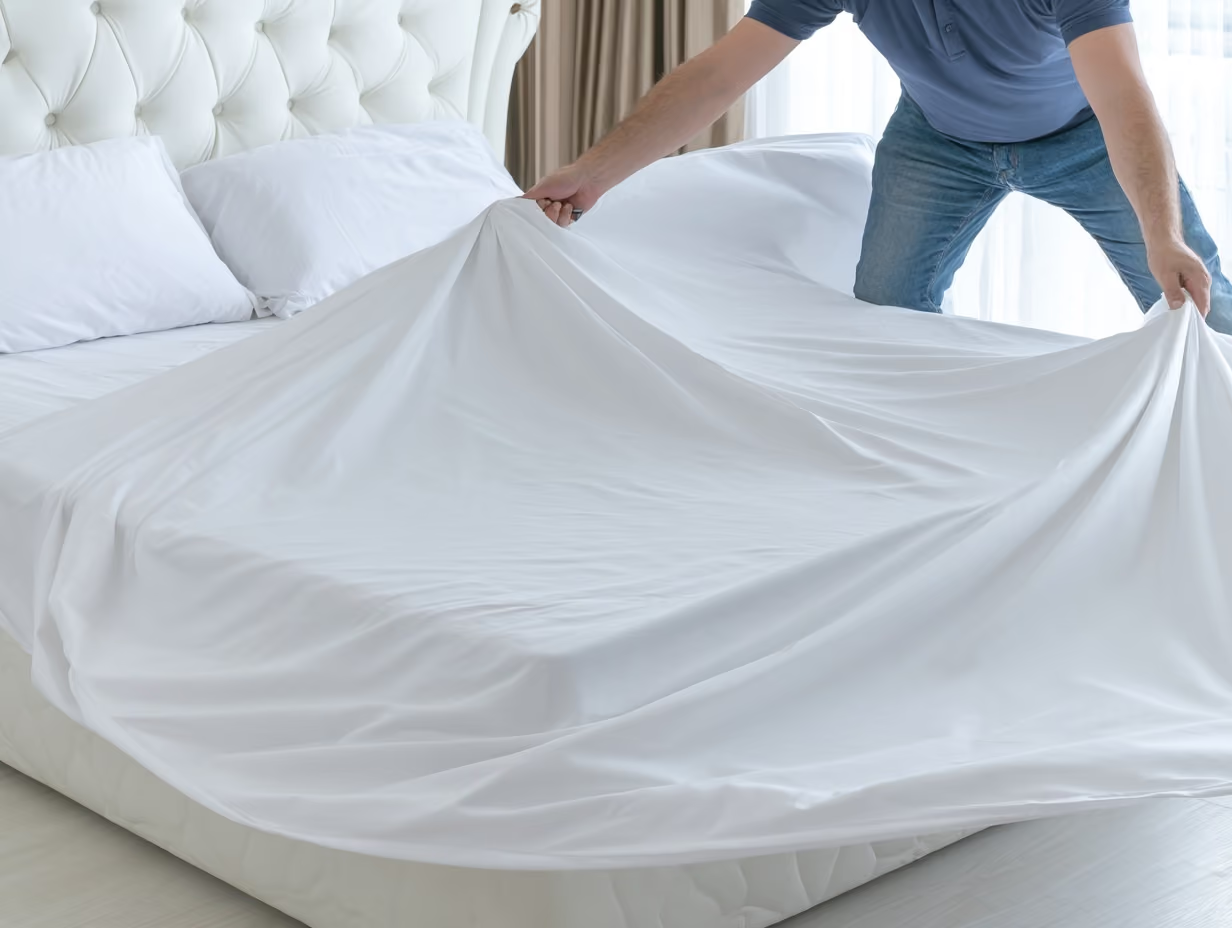
To clean an Airbnb between guests, run the same room-by-room turnover every time: start the laundry first because it is the slowest step, clear the trash and dishes, then clean from the top of each room down and from the back of the home toward the door so you never dirty a surface you already finished. Reset every room to its photo condition, restock the consumables guests expect, and do one final walk-through with fresh eyes before the next check-in. The job has to be written down and identical each time, whether you do it yourself or hand it to a cleaner.
I started with a single spare bedroom at $65 a night and now host through Iconic Retreats and co-host homes I do not own. The one habit that keeps cleanliness scores high across every property is a checklist that does not change. Below is the exact turnover I use, the timing that makes it fit between checkout and check-in, and how to hire and manage a cleaner once you stop doing it yourself.
Start the Turnover the Minute a Guest Checks Out
Most hosts set checkout for 10 or 11 a.m. and check-in for 3 or 4 p.m. That leaves four to five hours to flip the place, and it disappears fast once you factor in drive time and laundry. The biggest mistake I see is treating cleaning as one block of time. Treat it as a sequence instead, and put the slowest task first.
Laundry is the bottleneck. A wash and dry cycle for sheets and towels can run two hours or more, so I strip the beds and start the first load before I touch anything else. While it runs, I work the rest of the home. If your checkout and check-in are back to back on a busy weekend, this timing is the difference between a calm turnover and a guest standing at the door while the dryer is still going. Coordinating those windows gets much easier once you set up automated messages that confirm each checkout and remind the next guest of the arrival time.
My Room-by-Room Airbnb Cleaning Checklist
Print this, laminate it, and use it on every single turnover. The order matters: top to bottom within a room, so dust falls onto floors you clean last, and back of the home to the front, so you exit through clean space. Hand the same checklist to any cleaner you hire so the standard never depends on memory.
Hair is the first thing guests notice and the first reason a five-star clean slips to four, so check pillows, drains, and floors twice. How you set up the place also changes how fast this goes. Washable rugs, wipeable headboards, and surfaces that do not show every mark save you real time, so think about cleaning when you decide how to furnish an Airbnb.
Clean It Yourself or Hire a Cleaner?
When I started, I cleaned everything myself. It taught me the standard, and you should do your own first ten turnovers for the same reason. You cannot manage a cleaner to a bar you have never hit yourself. Once you have the routine down, the math usually favors hiring out. An hour of your time is better spent on pricing, guest communication, and finding the next property than on scrubbing a shower.
To find a cleaner, start with referrals from other local hosts, then look at turnover-specific cleaning services and independent cleaners who already work short-term rentals. They understand the deadline pressure and the reset-to-photos standard, which a regular house cleaner often does not. Pay a flat rate per turnover, not by the hour, so the incentive is a finished home rather than slow hours. The cleaning fee you collect from guests should track what you actually pay, so set both together when you work out your cleaning fee.
Manage the cleaner the way I manage mine: the same written checklist, a shared calendar so they see every booking, and a few photos of the finished home texted after each turnover. Those photos are your quality control and your proof of condition if a guest ever disputes damage. This is also the model that lets you run turnovers for owners when you are co-hosting someone else's property, without ever picking up a mop yourself.
Restock the Consumables on a Par List
A clean home that runs out of toilet paper still earns a bad review. I keep a fixed par stock in a locked owner closet and refill to that number on every turnover, so I never guess. My standard list:
- Bathroom: toilet paper (leave spare rolls in plain sight), hand soap, body wash, shampoo and conditioner, fresh towels
- Kitchen: dish soap, sponge, paper towels, trash bags, dishwasher pods, coffee, tea, salt and pepper, a basic cooking oil
- Whole home: hand soap at every sink, spare bin liners in each can, a fresh sponge, light cleaning supplies for longer stays
Buy these in bulk and treat them as a cost of doing business, not an extra. Which items you stock beyond the basics is a judgment call worth getting right, so plan the amenities guests actually expect rather than guessing.
Build a Linen and Laundry System
Linen is where a turnover either flows or falls apart. Keep at least two full sets of sheets and towels per bed and bath, and three if you run same-day turnovers. While one set is on the bed and one is in the wash, the third is ready to go, so a slow dryer never holds up a check-in.
Buy white, hotel-style linens in a single consistent size and brand. White bleaches clean, reads as fresh to guests, and lets you pull any stained piece without breaking up a matched set. For volume, many hosts move to an off-site laundry service or a wash-and-fold that delivers, which removes the in-house bottleneck. Whether you wash on site or send it out, the rule is the same: every guest sleeps on linens that were stripped, washed, and remade since the last stay, with no exceptions.
The Standards That Protect Your Reviews
Guests score the cleanliness of your home after every stay, and it is the rating they are quickest to punish. Airbnb's own standard is plain: a listing must be free of health hazards and meet a high bar of cleanliness before check-in. You can read the specifics in Airbnb's ground rules for hosts. Three things move the cleanliness score more than anything else: zero hair anywhere, no lingering smells (cooking, pets, smoke, damp), and small details that read as cared-for, like a folded towel edge or a streak-free mirror.
Cleaning and disinfecting are not the same job. You clean every surface on every turnover with soap and water to lift dirt and germs, and you disinfect high-touch points like handles, switches, and remotes on top of that. Per the CDC's guidance on cleaning and disinfecting, you clean first and disinfect second, because dirt left on a surface makes a disinfectant work less well. Set checkout expectations for guests too, since clear Airbnb house rules (start the dishwasher, bag the trash) keep your turnover shorter.
Do One Final Walk-Through Before Check-In
The last step is the one most hosts skip, and it is the cheapest insurance you have. After everything is reset, walk the home once more as if you were the guest arriving. Stand in the doorway of each room and look at it cold. Is the bed crisp, the trash gone, the bathroom dry, the floor hair-free, the temperature comfortable? Fix what your fresh eyes catch, then take your dated turnover photos. That final pass is how a clean home becomes a five-star one, and how you protect yourself if a guest later claims a problem that was not there when you left.
Make the System Yours
A great Airbnb clean is not about working harder on turnover day. It is a fixed sequence, a written checklist, a stocked par list, and a linen system that never runs short, repeated identically whether you or a cleaner runs it. Get those four right and your cleanliness reviews take care of themselves. If you want the full playbook for building this into a real hosting business, start with my free training, and you can grab my host resources here to put the system in place this week.
Frequently Asked Questions
How long does it take to clean an Airbnb between guests?
A standard one-bedroom turnover runs about one to two hours of active work for an experienced cleaner, plus laundry time that overlaps. Larger homes take longer, and the laundry cycle, not the scrubbing, is usually the real constraint. Start the first load of sheets and towels before anything else so the dryer is never what holds up your next check-in.
Should I clean my Airbnb myself or hire a cleaner?
Do your own first several turnovers so you know the standard, then hire out once the routine is set. Your time is usually worth more on pricing, guest communication, and finding the next property than on cleaning. When you hire, use turnover-specific cleaners, pay a flat rate per clean, and give them the same written checklist you use.
How much should I charge for an Airbnb cleaning fee?
Your cleaning fee should track what you actually pay a cleaner, not act as a hidden profit center, since guests now see the total price up front before they book. Set the fee and your cleaner's rate together so the numbers line up. A fee that dwarfs your nightly rate hurts short stays the most.
What is the most common Airbnb cleaning complaint?
Hair is the leading cleanliness complaint, followed by lingering smells and dust on the surfaces guests touch. Check pillows, drains, and floors twice, and air the home out during every turnover. These three issues account for most of the cleaning reviews that fall from five stars to four.
How many sets of sheets and towels do I need?
Keep at least two full sets per bed and bathroom, and three if you run same-day turnovers. One set is in use, one is in the wash, and the spare is ready, so a slow dryer never delays a check-in. Buy white, hotel-style linens in one consistent brand so a stained piece can be pulled without breaking up a set.
Do I need to disinfect an Airbnb between every stay?
Clean every surface with soap and water on every turnover, and disinfect high-touch points like handles, switches, and remotes on top of that. The CDC advises cleaning first and disinfecting second, because dirt left on a surface makes a disinfectant less effective. Deep disinfection of the whole home is only needed if a guest has been sick.
.png)
Be Part of our Community.
Let’s transform properties into powerhouses.
