
June 29, 2026
Airbnb House Rules: What to Include and How to Enforce Them
By Shaun Ghavami
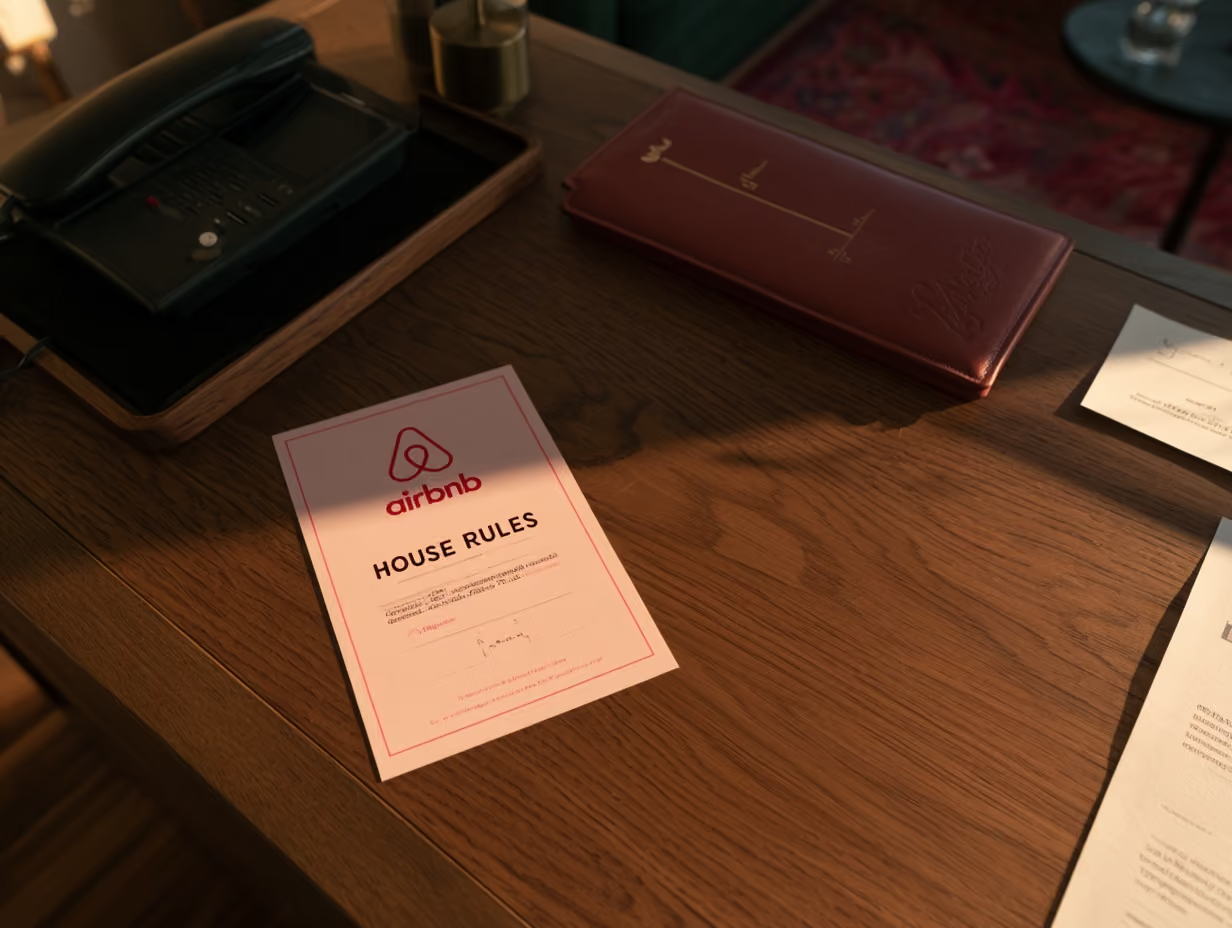
Good Airbnb house rules are short, specific, and enforceable. Cover the things that actually cause problems: no parties or events, whether smoking and pets are allowed, quiet hours, maximum occupancy, check-in and check-out times, and no unregistered guests. Write each rule in plain language, set it in your listing so Airbnb shows it to every guest before they book, and keep the tone welcoming so you do not scare off the good travelers who make up the large majority of bookings. Clear rules give you a calmer calendar and a far stronger position if you ever have to file a claim.
I have hosted more than three thousand guests since starting with one spare bedroom, and I co-host homes for owners who cannot afford a bad-neighbor situation. The pattern is consistent: hosts who write clear, reasonable rules have fewer bad nights than hosts who write none, or who write a wall of angry text. Here is what to include, example wording you can adapt, and how enforcement actually works.
What Every Set of Airbnb House Rules Should Cover
Airbnb already enforces a baseline set of ground rules that every guest agrees to. Your job is to set the rules specific to your property on top of that. These are the categories that matter, in the order I would write them.
No parties or events
This is the rule that protects your property and your standing with the neighbors. Airbnb made its global party ban permanent, so this is platform policy, not just your preference, and you can point to it directly. You can read the policy in Airbnb's party ban. Example wording: "No parties, events, or gatherings of any kind. This is a quiet residential home and the maximum occupancy is strictly enforced."
For the specific tactics that keep a listing from turning into a party in the first place, see how to prevent Airbnb parties.
Smoking and vaping
Be explicit, because smoke odor is one of the most expensive things to remove between guests. Example: "No smoking, vaping, or cannabis anywhere on the property, including balconies and the yard. A deep-cleaning fee applies if smoke odor is detected at checkout."
Pets
Decide clearly and say so, since an unannounced pet creates damage and allergy problems for the next guest. Example for a no-pet home: "No pets, with the exception of service animals as required by law." If you do allow pets, state the limit and any fee. Whether you allow pets also changes your turnover cleaning standards, so price and plan for it.
Quiet hours
Quiet hours are how you keep the neighbors on your side, which protects your ability to keep hosting at all. Example: "Quiet hours are 10 p.m. to 8 a.m. Please keep noise to a minimum out of respect for our neighbors."
Maximum occupancy
State the number the listing is set for and tie it to the reservation. Example: "Maximum occupancy is six guests, the number on the reservation. No additional overnight or daytime visitors without prior written approval." This rule does a lot of quiet work, since it backs up both your no-party rule and your pricing.
Check-in and check-out times
Be specific and explain the why, because the gap between checkout and check-in is your whole turnover window. Example: "Check-in is after 3 p.m. Check-out is by 11 a.m. so our cleaners have time to prepare the home for the next guest."
Pair this with clear checkout instructions so guests know exactly what to do before they leave.
No unregistered guests
This is the rule that keeps a quiet stay from turning into a party or an extra person who never appeared on the booking. Example: "Only guests listed on the reservation may stay overnight. Unregistered guests are not permitted." Keep this one firm, since it is also what Airbnb support will ask about if something goes wrong.
Example House Rules You Can Copy and Adapt
Here is a clean set you can paste into your listing and adjust to your property. Short sentences, plain language, no lectures.
- Treat our home with care, as if it were your own.
- Maximum occupancy is [X] guests, the number on your reservation.
- No parties, events, or large gatherings.
- No smoking, vaping, or cannabis anywhere on the property.
- No pets, with the exception of service animals.
- Quiet hours are 10 p.m. to 8 a.m.
- Check-in after 3 p.m., check-out by 11 a.m.
- Only registered guests may stay overnight.
- At checkout, please start the dishwasher, bag the trash, and lock up.
That last line is not really a rule, it is a courtesy request, and it keeps your turnover shorter. Clear, reasonable rules like these are part of the basic discipline of running a short-term rental well.
Rules only hold when they are enforced without you thinking about it, and I teach that layer in running an automated Airbnb business.
How Clear Rules Protect You and Your Claims Position
Rules are not only about behavior on the night. They are the paper trail that decides whether you get paid when something goes wrong. Airbnb's host protection, called AirCover for Hosts, includes up to $3 million in host damage protection for guest-caused damage, and you file a request through the Resolution Center within 14 days of the guest's checkout. The full terms are in AirCover for Hosts damage protection.
Here is why the rules matter for that claim. Damage protection covers guest-caused damage, not normal wear and tear, and it does not cover routine checkout cleaning. A clear, pre-agreed rule (no smoking, no pets, a capped occupancy) is the evidence that a guest crossed a line rather than that something simply wore out over time. Because the rule is written in your listing, the guest agreed to it at booking, and that agreement plus your dated turnover photos is what turns a he-said dispute into a payable claim. Vague rules, or no rules, leave you arguing from nothing. This is why I treat house rules as risk management, not paperwork, especially when I am co-hosting homes for other owners who are trusting me with their biggest asset.
How Airbnb Actually Enforces House Rules
This is where new hosts get the wrong idea. Airbnb does not send someone to your property at 11 p.m. Enforcement works in layers, and most of it runs through you plus Airbnb's systems after the fact.
There are two kinds of rules. Airbnb's standard ground rules (no parties, respect the property, no excessive noise) are enforced by Airbnb directly, and a guest who repeatedly violates them can be suspended or removed from the platform. The custom rules you add are enforced through Airbnb support: if a guest breaks one and you cannot settle it with them directly, you contact Airbnb, and where there is damage you file through the Resolution Center. Setting them up is simple, and you can see the steps for adding house rules in your listing settings.
Your two real tools are the review and the claim. After a stay, an honest review of a rule-breaking guest warns the next host and affects that guest's ability to book elsewhere, which is a genuine deterrent. For anything involving money, your written rule plus documentation drives the Resolution Center outcome. Rules you never wrote down are rules Airbnb cannot help you enforce.
Enforcement gets harder when you are managing an Airbnb remotely, since you are not there to catch a problem in person, so the written rule and the paper trail matter even more.
Rules that read as reasonable protect the review scores that feed into how Airbnb Guest Favorites works.
Set a Tone That Does Not Scare Good Guests
The most common mistake I see is rules that read like a warning notice. A wall of all-caps "DO NOT" lines makes a considerate guest feel suspected before they even arrive, and it does nothing to stop the rare bad actor who was never going to read carefully anyway. Write for the large majority who are good people.
Lead with a line of welcome, frame each rule as care for the home and the neighbors, and explain the reason where it helps ("check-out is 11 a.m. so our cleaners have time"). Keep the list short. A focused set of clear rules gets read and followed. A long list gets skimmed and ignored. The goal is a guest who knows exactly what is expected and still feels trusted, which is also what earns the five-star reviews that make starting your Airbnb pay off.
Make Sure Every Guest Actually Reads the Rules
Rules only protect you if the guest has seen them. Airbnb already shows your house rules in the listing, in the booking terms, in automated emails, and in the arrival guide, but I do not rely on that alone. I send the key rules again in a friendly pre-arrival message, with the two or three that matter most (occupancy, quiet hours, no parties) stated plainly. The easiest way to do this every time is with automated messages that fire at booking and again the day before check-in, so every guest gets the same clear reminder without you typing it out by hand.
A set of guest communication templates makes this consistent across every booking.
Put Your Rules to Work
House rules are not busywork. They are how you protect your property, keep your neighbors on side, and stand on solid ground if a stay goes sideways. Write a short, clear, friendly set, put them everywhere the guest will look, and back them with documentation. If you want the full system for building a hosting business that runs this cleanly, start with my free training, and you can get my host resources here to set yours up today.
Clear house rules also protect the reliability numbers behind clearing the Superhost bar, and a written rule set is the first thing to have in place before getting your first booking.
Clear rules also feed directly into earning 5-star reviews and, over time, increasing your bookings.
Frequently Asked Questions
What are the most important Airbnb house rules?
The rules that prevent the costliest problems are no parties or events, no smoking, a clear maximum occupancy, quiet hours, and no unregistered guests. Add a clear pet policy and your check-in and check-out times. Keep each one short and specific so guests actually read and follow them.
Can I ban parties at my Airbnb?
Yes, and Airbnb backs you up. Airbnb made its global party ban permanent platform-wide, so parties and disruptive events are prohibited regardless of your own rules. State it clearly in your listing anyway, tie it to your maximum occupancy, and report any violation to Airbnb if it happens.
How do I enforce my Airbnb house rules?
Airbnb enforces its standard ground rules directly and can suspend guests who repeatedly violate them. Your custom rules are enforced through Airbnb support and the Resolution Center, which is where you file if a guest causes damage. Your honest review after the stay is also a real deterrent, since it affects the guest's ability to book elsewhere.
Will strict house rules hurt my bookings?
Clear rules do not hurt bookings, but an angry wall of text can. Good guests, who are the large majority, want to know what is expected and to feel trusted. Keep the list short, lead with a welcome, explain the reason behind a rule where it helps, and you will attract considerate guests rather than scare them off.
Can I charge a guest for breaking a house rule?
You cannot fine a guest arbitrarily, but you can seek reimbursement for actual damage or extra cleaning through Airbnb's Resolution Center. AirCover for Hosts includes up to $3 million in damage protection for guest-caused damage, and claims are filed within 14 days of checkout. A written rule the guest agreed to, plus photos, is what supports the claim.
Where do guests see my Airbnb house rules?
Airbnb shows your house rules in the listing description, in the booking terms when a guest reserves, in automated guest emails, and in the arrival guide before the trip. Guests agree to them at booking. I also resend the most important rules in a pre-arrival message so nothing important gets missed.
.png)

Be Part of our Community.
Let’s transform properties into powerhouses.
