
June 29, 2026
What Is a Short-Term Rental? A Plain-English Definition for New Hosts
By Shaun Ghavami
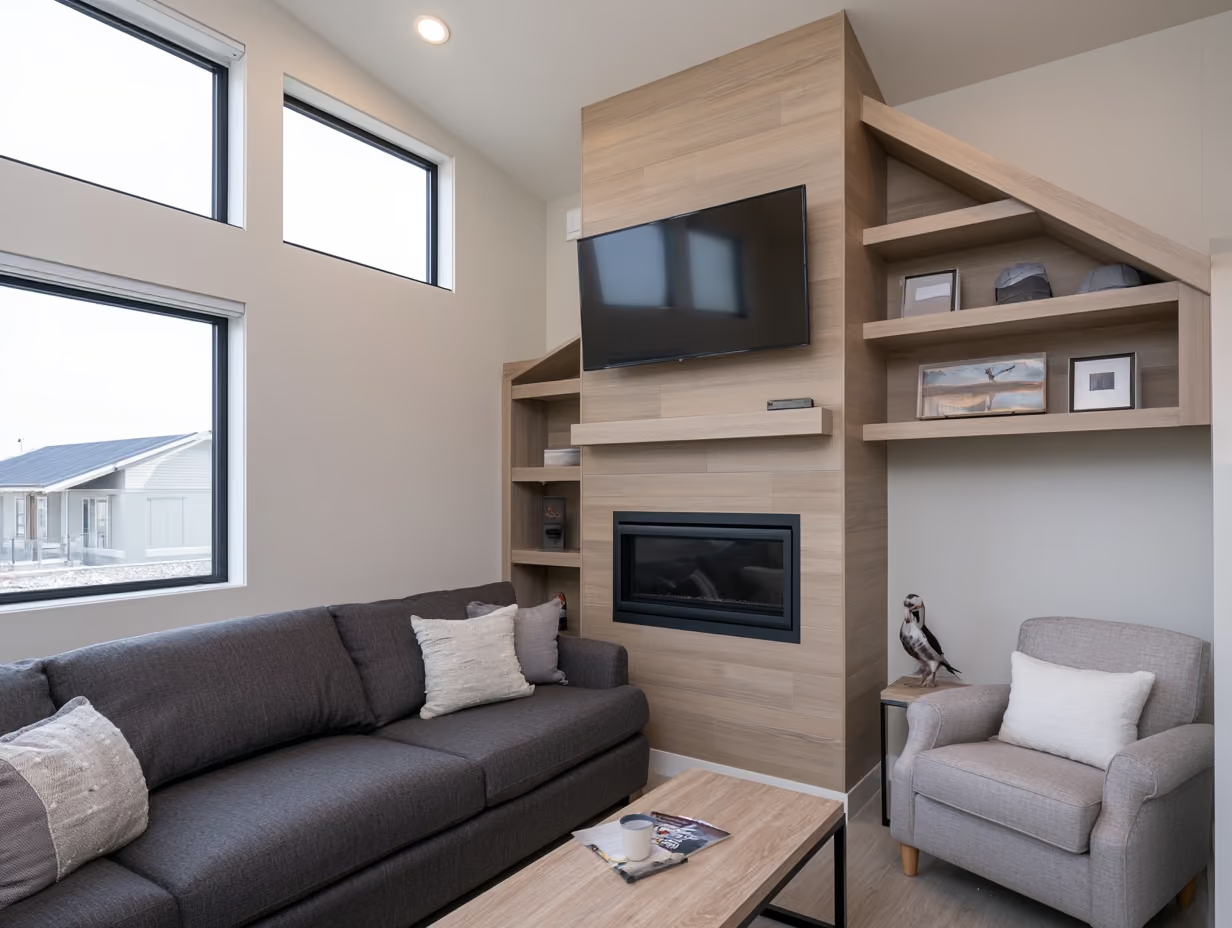
A short-term rental is a furnished home, apartment, or private room that you rent to guests for a short stay, usually a few nights up to a few weeks, instead of signing a long lease with one tenant. Most cities treat any booking shorter than about 30 consecutive nights as short-term. You list the space on a site like Airbnb or Vrbo, set a nightly price, and a new guest checks in and out every few days. That is the whole idea in one sentence.
I am Shaun. I started with a single spare bedroom at $65 a night and went on to help manage a large portfolio of these rentals. When people ask me what a short-term rental really is, I tell them to picture a hotel room run by a regular person instead of a chain. This page covers the definition, how short-term renting differs from a long lease and from a traditional vacation rental, the main booking platforms, how the money works for a host, who the model suits, and the local rules you should check before you list.
What Counts as a Short-Term Rental
A short-term rental, often shortened to STR, is a fully furnished place rented out by the night or the week. The guest gets a self-contained space with a bed, a bathroom, a kitchen or kitchenette, and the basics they would need on a trip. The host gets paid per stay rather than per month. People also call these properties holiday lets or vacation rentals depending on where they live.
What is considered a short-term rental usually comes down to length of stay. Many local governments draw the line at fewer than 30 consecutive nights. Portland, for example, does not permit rentals shorter than 30 days in some residential zones, which is the kind of rule you see written into city codes. Anything at or below that threshold tends to fall under short-term rules, permits, and taxes. Anything longer usually counts as a standard residential lease.
The space itself can be almost anything: a spare room, a city apartment, a basement suite, a whole house, a cabin, or a condo. The common thread is that it is furnished, ready to use on arrival, and booked for a short window. If you want the full beginner roadmap after this, I put it all in one place in my short-term rental guide for beginners.
Short-Term Rental vs Long-Term Rental
The fastest way to understand a short-term rental is to set it next to a normal long-term lease. They are two different businesses with the same starting asset, a place to sleep.
| Factor | Short-term rental | Long-term rental |
|---|---|---|
| Typical stay | 1 night to a few weeks | 6 to 12 months or longer |
| Furnished? | Yes, fully | Usually unfurnished |
| Who pays utilities | The host | Usually the tenant |
| Income per night | Higher, but variable | Lower, but steady |
| Work to run | High: cleaning, messaging, turnovers | Low: rent collection, occasional repairs |
| Booked through | Airbnb, Vrbo, direct | A lease and a single tenant |
A long-term rental is calm and predictable. One tenant, one rent check, very little day-to-day work. A short-term rental can earn more per night, but you trade that for turnover. Every booking means a clean, a message thread, and a fresh check-in. Most new hosts underestimate the operations side, so go in knowing that the higher income comes with more hands-on work or the cost of hiring help.
How a Short-Term Rental Differs From a Traditional Vacation Rental
People use "short-term rental" and "vacation rental" almost interchangeably, and that is fine for everyday talk. There is a small difference worth knowing. A vacation rental is the older term for a furnished home rented to travelers, and it usually brings to mind a beach house, a lake cabin, or a ski condo booked for a week.
Short-term rental is the broader, more modern label. It covers those vacation homes, but it also covers a downtown apartment rented to a business traveler for three nights, a spare room rented to a tourist, or a suburban house rented to a family in town for a wedding. In short, every vacation rental is a short-term rental, but not every short-term rental is on a vacation. The platform names carry this history too. Vrbo literally stands for Vacation Rentals by Owner and is owned by Expedia Group, while Airbnb grew up around city rooms and apartments before adding whole homes.
The Main Platforms: Airbnb and Vrbo
Almost every new host starts on one of two marketplaces. Airbnb is the largest by listing count and guest traffic, and it handles everything from single rooms to entire homes. It is where I started and where most of my bookings still come from. The second is Vrbo, which focuses on whole-home stays and tends to draw families and groups rather than solo travelers.
Both work the same way at a high level. You build a listing with photos, a title, a description, house rules, and a calendar. You set a nightly rate. Guests find you through search, book, and pay through the platform. The site holds the money, takes a service fee, and sends you a payout. Many experienced hosts list on both Airbnb and Vrbo, plus take direct bookings, so a slow week on one channel gets filled by another. If you are deciding where to begin, start with one platform, learn it well, then add a second once your first listing runs smoothly.
How the Short-Term Rental Model Works for a Host
Here is the cycle I run on every property, start to finish. First, you prepare the space: furnish it, stock the basics, and take strong photos. Second, you publish the listing and set a price. Third, a guest books and the platform charges them. Fourth, the platform takes its cut and pays you out, with Airbnb releasing the payout about a day after the guest checks in. Fifth, the guest checks out, a cleaner resets the space, and you are ready for the next booking.
The fee is the part new hosts forget to plan for. On Airbnb, most hosts either pay a split service fee of about 3% or a host-only fee of about 15.5%, depending on which plan applies to them. You can read the current numbers on the official page for Airbnb service fees. Budget for that cut, plus cleaning, supplies, and utilities, when you work out what a night actually earns you. For the full setup walkthrough, see how I start an Airbnb business from scratch.
Who Short-Term Renting Suits, and Who It Doesn't
This model fits you well if you want higher income per night than a long lease pays, you are comfortable with a business that has real operations, and you either enjoy hosting or are willing to hire cleaners and use software to handle the busywork. It also fits people who do not own a property yet. You do not need to buy a house to start. You can run someone else's property for them through co-listing, or you can rent a unit and sublet it short-term where the lease and local law allow. I cover the no-capital paths in detail in how to start a rental with no money.
It suits you less if you want fully passive income with zero involvement, if your local rules ban short stays, or if you cannot stomach income that rises and falls with the season. There is nothing wrong with a long-term rental if steady and quiet is what you want. Be honest with yourself about how much work you will actually put in, and whether short-term rentals are still profitable in your specific market before you commit money to furniture.
Local Rules, Licensing, and Taxes
This is general information, not legal advice, and the rules change by city, so check your own before you list. Most places that regulate short-term rentals ask for some mix of three things. One, a permit or license, sometimes with a cap on how many nights you can rent per year. Two, an occupancy or lodging tax that you collect from guests and remit to the city or state, similar to a hotel tax. Three, building, condo, or homeowners-association rules that may restrict or ban short stays entirely.
Before you spend on furnishings, search your city name plus "short-term rental rules" or "STR permit," read the actual ordinance, and confirm your building allows it. A rental that runs into a permit problem after you have spent thousands on setup is an expensive lesson. A quick call to your city's planning department early can save you a lot of grief.
How to Start Your First Short-Term Rental
If the model sounds like a fit, do not overthink the first move. Pick one property you can list legally, whether you own it, manage it for someone else, or rent it with permission. Furnish it for guests, take good photos, write a clear listing, set a fair starting price, and publish. You will learn more from your first ten bookings than from a month of research.
Want the full step-by-step path instead of a definition? Grab my free getting-started guide, or see how I coach new hosts through their first listing on the 10XBNB program. Start small, learn the operations, and let your first property prove the model before you scale.
Before you list anything, check the laws that apply in your city, since the definition above is general and your local rules are not.
If your plan involves a rental unit rather than a place you own, how to convince your landlord to allow Airbnb covers that conversation directly.
Frequently Asked Questions
What is considered a short-term rental?
A short-term rental is a furnished property rented to guests for a short stay, most commonly fewer than 30 consecutive nights. Many cities use that 30-night line in their rules to separate short-term rentals from standard residential leases. The exact threshold and the permits attached to it vary by location, so check your local ordinance.
Is a short-term rental the same as an Airbnb?
Not exactly. "Airbnb" is one booking platform, while "short-term rental" is the type of property itself. You can run a short-term rental on Airbnb, on Vrbo, through direct bookings, or on several channels at once. Airbnb became so popular that many people use its name as a shorthand for the whole category.
How is a short-term rental different from a long-term rental?
A short-term rental is furnished, booked by the night or week, and turns over often, which can earn more per night but takes more day-to-day work. A long-term rental is usually unfurnished, leased to one tenant for six months or more, and earns a steady but lower monthly rent with far less management. They are two different businesses built on the same property.
Do you need to own property to run a short-term rental?
No. You can manage someone else's property for a share of the revenue through co-listing or co-hosting, or you can rent a unit and sublet it short-term where the lease and local law permit it. These no-capital routes are how many new hosts get started without buying a home first.
Do I need a license for a short-term rental?
In many cities, yes. A lot of local governments require a short-term rental permit or license, charge an occupancy tax, and set rules on how many nights you can host. Always confirm the requirements with your own city or county before you list, since this is general guidance and not legal advice.

.png)

Be Part of our Community.
Let’s transform properties into powerhouses.
