
July 13, 2026
Airbnb Interior Design Ideas That Increase Bookings
By Shaun Ghavami
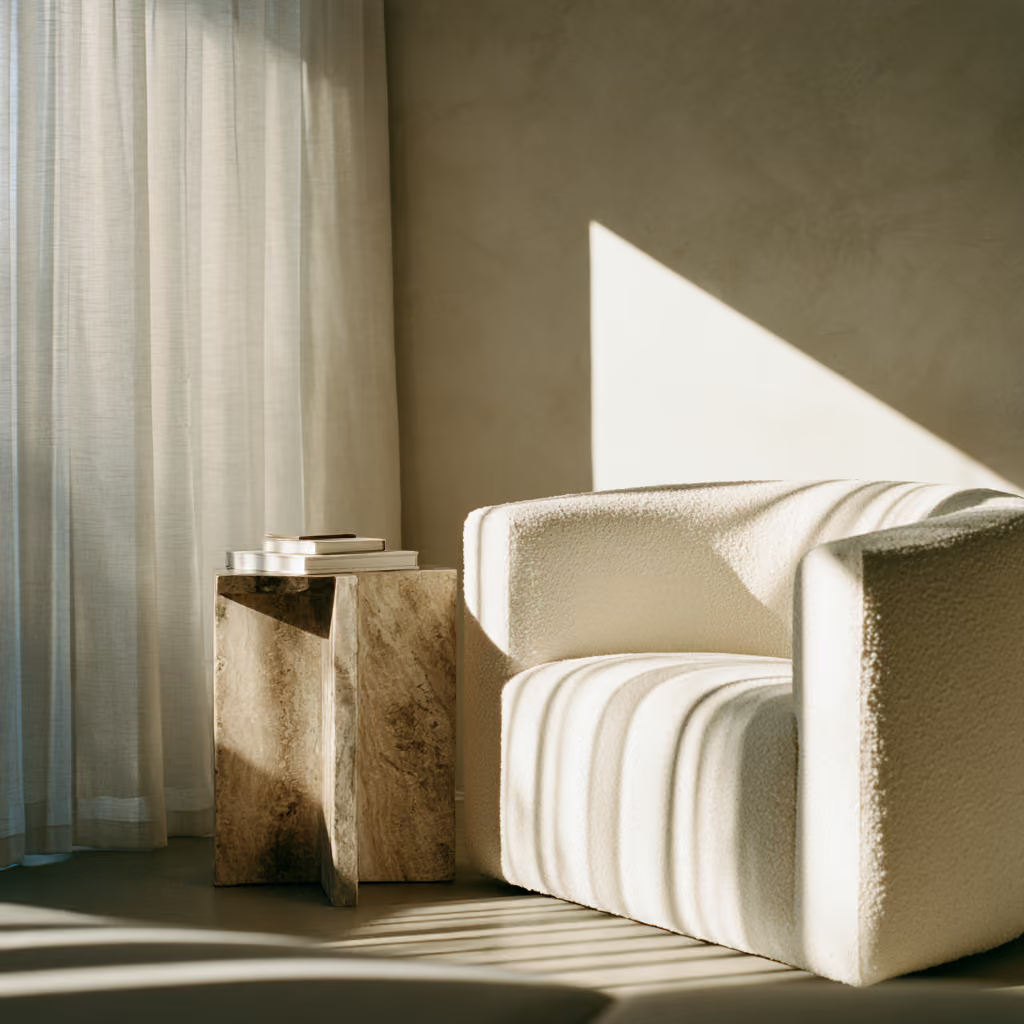
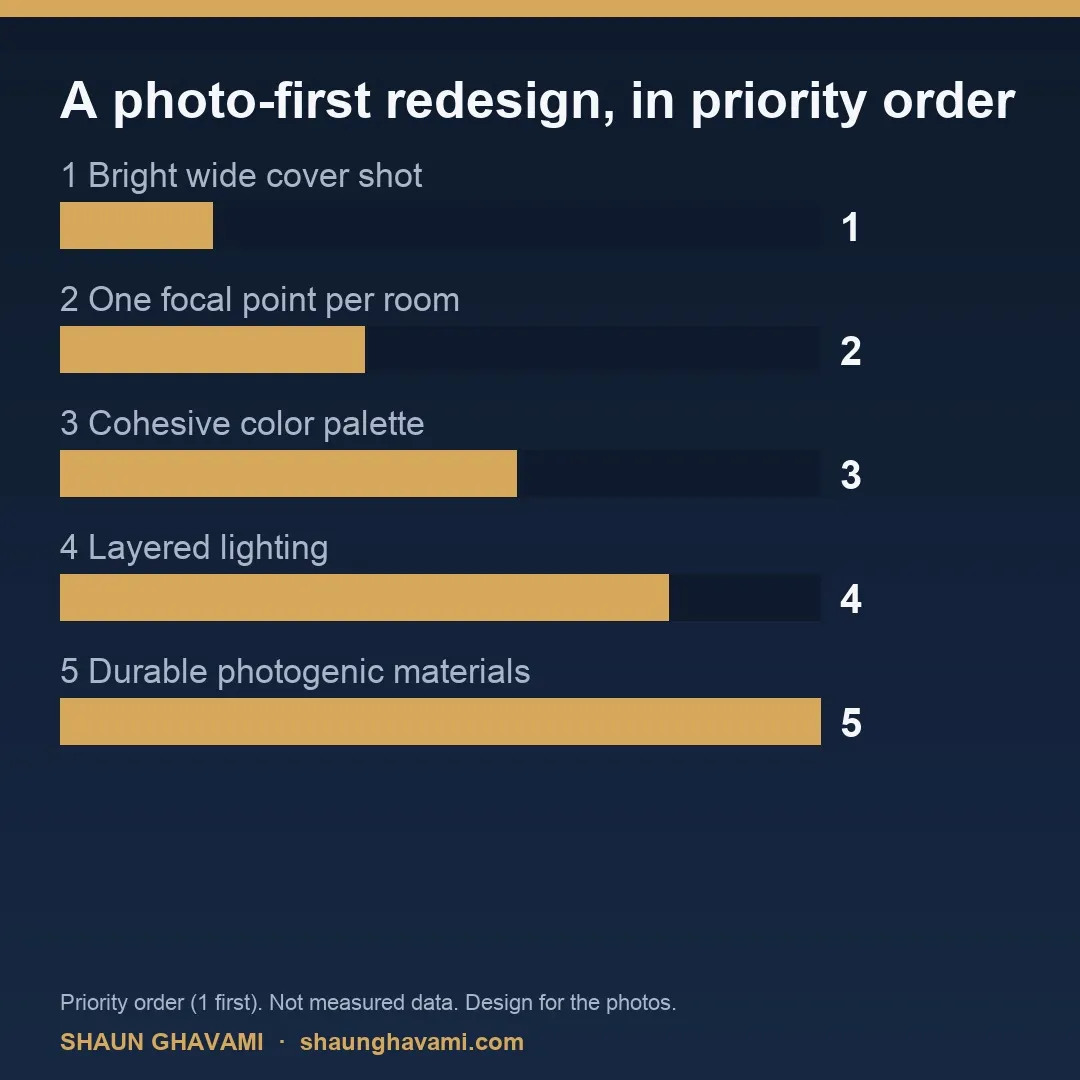
Good Airbnb interior design is design that photographs well, reads clearly in a small grid of images, and gives a guest a reason to pick your place over the ten listings next to it. Guests almost never see your rental before they book. They book the photos. So the highest-return design work is not about a designer's taste, it is about making every room read as bright, distinct, and cared-for in a single frame. The moves that do that are a strong cover shot, one clear focal point per room, a cohesive color palette, layered lighting, and materials that stay stylish while surviving heavy use. Below are the ideas I use on the properties I manage to lift both bookings and the nightly rate.
I have hosted more than 3,000 guests and helped style a nine-figure portfolio of properties I manage but do not own. What follows is the operator view of design, not the magazine view. Every idea here is judged by one question: does it earn its keep in the listing photos and in the review?
Design for the photos first
Here is the reframe that changes everything. Your listing is not the physical space. Your listing is the set of photos of that space. A guest scrolling a phone at midnight compares your cover image against a wall of others in under a second. If you design for how a room feels to stand in but forget how it reads in a photo, you lose that second.
So I design backwards from the camera. Before I buy a single item I ask what the hero shot of each room will look like, then I style toward that shot. Interior design is the art and science of making a space healthier and more pleasant to be in, and for a rental you add one more job on top: it has to sell in a thumbnail.
Nail the cover shot and shoot for the grid
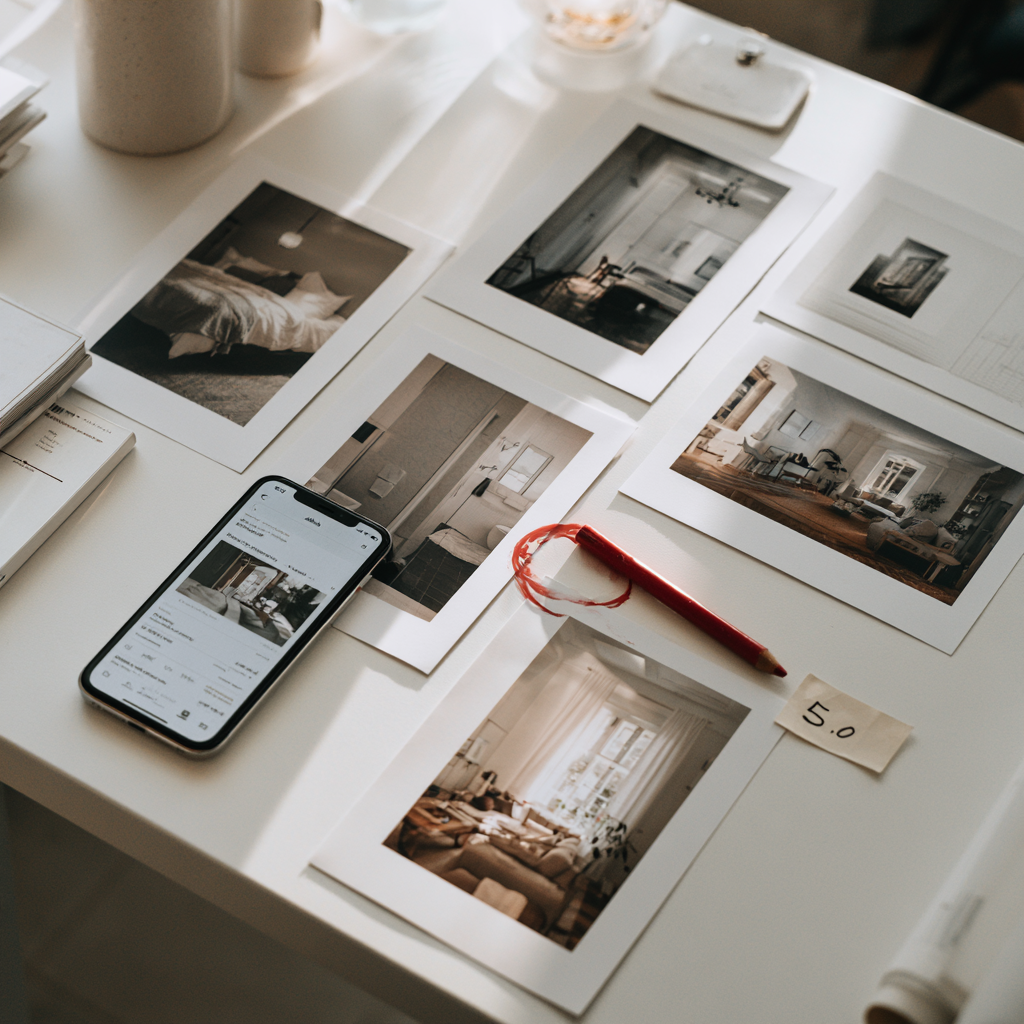
The cover photo is the whole ballgame. It is the one image that decides whether a guest clicks in or scrolls past. Per Airbnb's listing photo tips, photos in search appear horizontally, so a vertical phone shot loses impact, and Airbnb advises shooting at least 1024 by 683 pixels and opening blinds and turning on lights to brighten the room. Take those as rules, not suggestions.
My checklist for the cover and the first five images:
Give every room one focal point
A focal point is the thing your eye lands on first: a headboard wall, an arched mirror, a piece of art, a fireplace. Every room needs exactly one. When a space has a single strong subject, the photo has a subject too, and the room feels intentional. When a room has no focal point, the photo looks like storage, and when it has five, the photo looks chaotic.
Cheap, high-impact focal points I reuse: an oversized piece of framed art above the bed, a bold headboard, a single large plant in a good pot, a distinctive light fixture. You do not need a big budget. You need one confident choice per room and the discipline to stop there.
Pick a cohesive palette and give the place a theme
A cohesive color palette is the fastest way to make a mid-budget space look designed. Pick three colors: a neutral base for walls and large furniture, a warm secondary for wood and textiles, and one accent that repeats across rooms in pillows, art, and small objects. That repetition is what makes a scroll through your photos feel like one home rather than a furniture showroom.
A light theme helps too, as long as it is subtle. Coastal, mid-century, cabin, city-loft: a gentle direction gives guests a story to picture themselves in and gives your listing a memorable identity in a sea of beige rentals. Keep it to a few honest touches. A themed room that tips into a costume photographs as a gimmick.
Layer your lighting
Lighting is the single most underrated design lever in a rental, because it changes how warm and how large a room looks in every photo and every stay. Rely on a single ceiling fixture and your rooms photograph flat and cold. Layer the light and they glow.
Three layers do the job:
Put lamps on the bedside tables of every bedroom. They photograph beautifully with the bulbs on, and guests read a well-lit bedroom as comfortable before they consciously notice why.
Want the co-hosting playbook? Shaun teaches this system inside 10XBNB. Get the free Airbnb co-hosting training
Choose durable materials that still look good
A rental takes abuse a home never sees. The design skill is picking pieces that survive turnover after turnover and still photograph well two years in. Style that falls apart is not style, it is a replacement bill and a set of bad photos.
Once the space photographs well, name it in a way that matches, which I demonstrate in titles for your Airbnb listing.
Instead ofUseWhy it winsLight linen sofaPerformance-fabric or leather sofa in a mid toneWipes clean, hides wear, still photographs softWhite grout and rugsPatterned or mid-tone rugs, darker groutStains do not show in photos or in personGlass and delicate decorSolid wood, metal, ceramicSurvives guests and movers, reads as qualityTrendy fast furnitureA few solid anchor pieces plus cheap swappable accentsAnchors last, accents refresh the look cheaply
This durable-but-stylish balance is where design meets operations. Materials that clean up fast also make your turnovers quicker and your reviews better, which I get into in keeping it clean between guests. And the one piece I never cut corners on is the bed, because sleep quality drives reviews. My pick is in the mattress I put in every unit.
Small-space tricks that photograph big
Most rentals are not large, so making a small space read as open is a core design skill. What works for me:
When you are ready to buy, I list the exact pieces and quantities I put in each property in my furnishing buy-list, so you are not guessing on the fill items.
Design the amenities into the photos
Design is not only furniture. The features guests search for, fast wifi, a real workspace, a stocked coffee station, a well-equipped kitchen, are worth styling into your photos on purpose. A clean desk by a window with a lamp signals remote-work ready. A tidy coffee bar signals a host who thought about the morning. Pick the features that matter in your market from the amenities guests actually search for, then stage each one in its own frame so a shopper filtering for it sees it instantly.
Design and your nightly rate
Design is one of the few levers that lifts both your booking rate and your price at the same time. A space that photographs as distinct and well-cared-for lets you hold a higher nightly rate against plainer listings, and it earns the five-star reviews that let you keep raising it. I treat a styling budget as a pricing tool, not a decoration cost. Once your photos are pulling their weight, revisit setting your nightly rate and push, because good design gives you room the average listing does not have.
Designing when you co-host a property you don't own
You do not need to own a property to profit from great design. On the doors I manage, I style and photograph rentals for the owners and take a share of the bookings, which means the design work directly grows my income without me buying real estate. If that path interests you, design is one of the most valuable skills you can bring to an owner, because a restyle and a fresh photo set can lift an underperforming listing fast. Start with co-listing a property you don't own, then use the design ideas here to make each listing you manage the best-looking one in its market. If you are earlier than that, my guide to starting your Airbnb lays the groundwork.
Once the room photographs well, back it up with words. See putting it into words in your listing description, and if you allow animals, the durable material choices above pair directly with designing for pet friendly stays.
Design is one piece of the conversion puzzle, and the full pass across photos, title, description, amenities, and reviews is in how to optimize your Airbnb listing.
Frequently asked questions
Does interior design really increase Airbnb bookings?Guests book from photos, so design that photographs as bright, distinct, and cared-for wins more clicks and bookings than a plain space. Strong design also supports better reviews and a higher nightly rate over time.
What is the single most important design move for a rental?The cover photo. It is the first image guests see in search and it decides whether they click in. Lead with your brightest room, shot wide and horizontal in daylight with the lamps on.
How much should I spend on furnishing and design?Spend where it photographs and where guests touch it: the bed, the sofa, lighting, and one focal point per room. Save on fill decor with cheap, swappable accents. Treat the budget as a pricing tool, since better design supports a higher rate.
What colors work best for an Airbnb?Use a three-color palette: a neutral base, a warm secondary, and one accent that repeats across rooms. That repetition makes a mid-budget space read as intentionally designed in the photos.
How do I make a small Airbnb look bigger in photos?Place mirrors opposite windows, choose furniture with visible legs, use one properly sized rug, keep surfaces mostly clear, and shoot horizontally at eye level. These tricks make a small room read as open on camera.
What materials hold up best in a short-term rental?Performance fabrics or leather, solid wood, metal, and ceramic, plus mid-tone or patterned textiles that hide wear. Durable materials survive frequent turnovers and still photograph well, and they clean up faster between guests.
Turn design skill into income without owning property. Co-hosting lets you style and run listings for owners for a share of each booking. Get the free Airbnb co-hosting training
.png)
Be Part of our Community.
Let’s transform properties into powerhouses.
