
June 29, 2026
How to Become an Airbnb Owner: Buying and Investing in Short-Term Rentals
By Shaun Ghavami
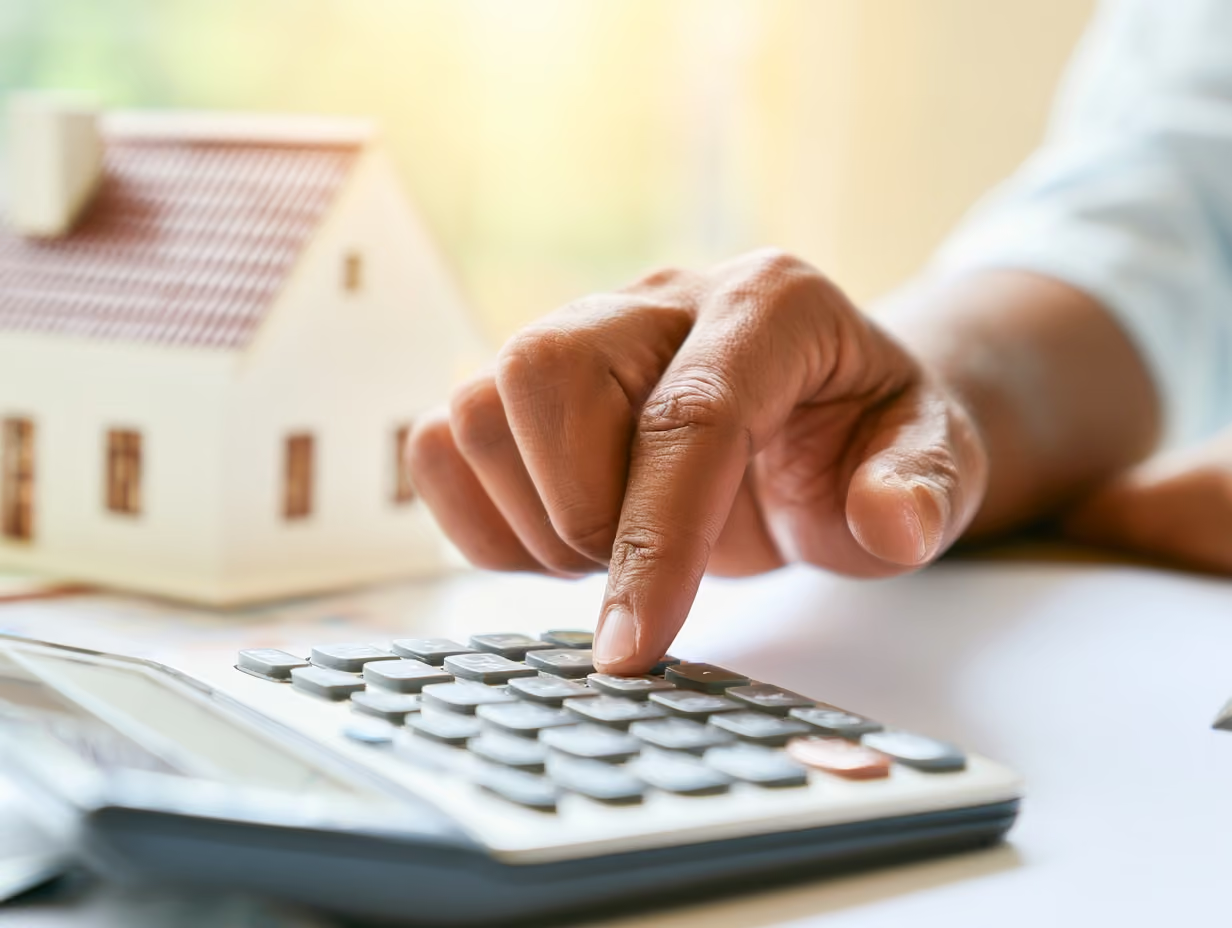
To become an Airbnb owner, you buy a property in a market that allows short-term rentals, run the numbers before you make an offer, finance the purchase, then operate the place yourself or hand it to a co-host or property manager. The order matters more than people think. Market and math come first, the mortgage comes second, and furniture and the listing come last. Buying an Airbnb is real estate investing with a hospitality business bolted on top, and both halves have to work. I have spent years operating short-term rentals, most of which I do not own, and the owners who win are the ones who treat the purchase like a numbers decision, not a vacation-home daydream.
This guide walks the owner path from the buy decision to the day-to-day operation. If you have little or no capital, this is not your starting point yet. Read how to start an Airbnb with no money first, then come back when you have a down payment saved.
First, decide whether buying is the right move
Owning is not automatically better than managing. They are two different businesses. When you buy, you get the equity, the appreciation, and the full nightly profit, but you also carry the loan, the repairs, the slow seasons, and the risk if the market or the local rules turn against you. When you co-host instead, you keep none of the equity but risk none of the capital.
Buy when you have a real down payment, a reserve for slow months, and the patience to treat this as a multi-year hold. Manage other people's properties when you want income now without putting cash on the line. Many of the best owners I know started by co-hosting, learned the business on someone else's asset, then bought once they understood their market cold. If you are weighing the two, the contrast in how to become an Airbnb co-host is worth reading before you commit a dollar.
Pick a market that allows short-term rentals
The single most expensive mistake new owners make is buying first and checking the rules second. Cities and counties across North America have tightened short-term rental laws, and some have banned them in whole neighborhoods. A property is only an Airbnb if the local government lets it be one.
So start with legality. Read the city or county short-term rental ordinance, check whether permits are capped, and find out whether the rules are getting looser or stricter. A market with steady demand and a stable legal footing beats a famous destination with strict caps or a pending ban. Once you have a shortlist of legal markets, judge each on real demand: how often comparable listings actually book, what they charge, and how seasonal the income is. A clear-eyed view of whether Airbnb is still profitable in your target area should come before any offer, not after.
Run the numbers before you buy
This is the part that separates investors from gamblers. Before you make an offer, you build a simple income model and stress-test it. The rough revenue formula is the average nightly rate multiplied by your occupancy rate multiplied by 365. A place that rents for an average of 150 dollars a night at 60% occupancy produces about 32,000 dollars a year in gross booking revenue. That is the top line, not your profit.
Then subtract the real costs. Pull historical occupancy and average daily rate data for the exact area from a market-data source like AirDNA rather than guessing, because optimistic guesses are how people overpay. Your expense list should include:
- Mortgage principal and interest
- Property taxes and insurance (short-term rental insurance costs more than a standard homeowner policy)
- Airbnb's host service fee, which for most hosts is a host-only fee of about 15.5% taken from your payout, per the Airbnb Help Center
- Cleaning, restocking supplies, and utilities
- Management or co-host fees if you are not self-managing
- Repairs, maintenance, and a reserve for the inevitable surprise
If the property still cash-flows after a conservative occupancy estimate and every line above, you have a deal worth pursuing. If it only works at 80% occupancy and perfect pricing, walk away. The market will not hand you perfect. For setting the rate itself once you own, I break down the method in how to price your Airbnb.
Financing the purchase (general information, not advice)
Most people buy an Airbnb with a conventional investment-property loan, and some start with a primary residence they later convert into a rental. Lenders treat a short-term rental as an investment property, which usually means a larger down payment and a higher interest rate than an owner-occupied home. A few owners use partnerships or bring in a money partner while they run the operation, which is its own version of starting with limited capital of your own.
This section is general information, not financial advice. Loan products, rates, and rules change, and they vary by lender and by country. Talk to a mortgage professional and a tax advisor before you sign anything, and build your model on the actual terms you are quoted rather than the best case you read online. Know your real monthly carrying cost before you fall in love with a property.
How to actually operate it: self-manage, co-host, or property manager
Owning the property is half the job. Running it is the other half, and you have three ways to handle the day-to-day.
Self-managing keeps every dollar but ties you to your phone. A co-host or property manager takes a cut, commonly around 20% for full-service management per Hostaway, in exchange for handling guests, cleaning coordination, and the 2 a.m. problems. If you live far from the property or plan to own more than one, paying a good operator is usually worth every point of that fee. If you are local and want to learn the craft, self-manage the first one yourself before you scale.
Whichever route you pick, treat the operation like a hospitality business. Fast guest replies, spotless cleaning, accurate photos, and honest short-term rental expectations are what produce the five-star reviews that keep your calendar full. If you want the full operational playbook for running it as a real company, see starting an Airbnb business from scratch.
Be honest about the capital and the risk
Becoming an Airbnb owner is a wealth play, not a quick flip. You are tying up a down payment, closing costs, and a furnishing budget that often runs into the thousands before your first guest checks in. You carry the mortgage in the slow months whether the calendar fills or not. Local rules can change after you buy. None of that is a reason to avoid ownership, but all of it is a reason to buy with a margin of safety instead of a best-case spreadsheet.
The owners who do well buy below their ceiling, keep a cash reserve, and run the place like the business it is. If that sounds like the path you want, I walk through the whole approach in the free training I built, and you can grab my free starter guide to keep the plan in front of you.
Frequently asked questions
How much money do you need to become an Airbnb owner?
Enough for a down payment, closing costs, and furnishing the place, plus a cash reserve for slow months. Lenders usually treat a short-term rental as an investment property, which often means a larger down payment than a primary home. Furnishing a full unit commonly runs into the thousands before your first guest books.
Is owning an Airbnb still profitable in 2026?
It can be, but the easy money is gone and the result depends almost entirely on the market and your numbers. Supply has grown, so owners profit by buying right and operating well rather than by listing any property and hoping. Pull real occupancy and rate data for the exact area before you buy.
How do you finance an Airbnb investment property?
Most owners use a conventional investment-property loan, though some start with a primary residence they later convert. Lenders treat short-term rentals as investment properties, which usually means a higher down payment and rate than an owner-occupied home. Talk to a lender and a tax professional first, since this is general information and not financial advice.
Should you manage your Airbnb yourself or hire a co-host?
Self-managing keeps all the revenue but takes real daily time, including nights and weekends. A co-host or property manager takes a cut, commonly around 20% for full service, in exchange for handling guests, cleaning, and problems. If you live far from the property or own several, paying a good operator is usually worth it.
What is the difference between owning an Airbnb and co-hosting one?
Owning means you buy the property, carry the mortgage and the risk, and keep the equity and the upside. Co-hosting means you manage someone else's property for a fee with no capital at stake. Owning needs money and patience, while co-hosting needs hustle and time.
How do you choose a market for a short-term rental?
Start with places where short-term rentals are legal and likely to stay that way, then judge real demand using historical occupancy and average daily rate data. A market with steady demand and reasonable purchase prices beats a famous destination with strict rules or very high entry costs. Tools like AirDNA let you check the numbers before you buy.
.png)

Be Part of our Community.
Let’s transform properties into powerhouses.
