
July 20, 2026
Airbnb Co-Hosting Mistakes to Avoid: 9 Errors That Cost New Co-Hosts
By Shaun Ghavami

The most common Airbnb co-hosting mistakes are working without a written agreement, underpricing your service, taking on bad owners and listings, over-promising occupancy, having no cleaning and turnover system, replying to guests too slowly, not defining which number your percentage applies to, scaling before your systems are ready, and leaving insurance and liability vague. Each one is fixable, and most cost you money quietly before you notice. Below is the mistake, why it hurts, and the exact fix.
I am Shaun Ghavami. I co-founded 10XBNB and run Iconic Retreats in Vancouver, and I have managed a portfolio worth over $100 million for other owners without owning those units myself. I have made a few of these mistakes and cleaned up after co-hosts who made the rest. This list is the short version of what I wish someone had handed me at the start.
Mistake 1: No written co-hosting agreement
The mistake: Starting on a handshake. Scope, payout, and timing all live in your head and the owner's head, and the two versions do not match.
Why it hurts: The first disagreement (a guest refund, a maintenance bill, who pays for the cleaner) has no answer, so it becomes an argument. That is how good relationships end and how you work for free.
The fix: Put it in writing before the first booking. Define your services, your rate, what you do and do not cover, and how and when you get paid. Start from my Airbnb co-hosting agreement guide and adapt it to the deal.
Related trap: not defining which number your percentage applies to
A 20% cut means nothing until you say 20% of what. Booking subtotal, host payout, and the total the guest paid are three different numbers, because Airbnb's fees sit between them (in the split-fee model, guests pay roughly 14.1% to 16.5% of the subtotal and the host pays about 3%, per Airbnb's published service-fee terms). Name the exact base in the agreement. My breakdown of co-host pay and fees shows how these numbers stack.
Mistake 2: Underpricing your service
The mistake: Charging 8% or 10% to win the owner, then discovering the work is full-service.
Why it hurts: The gap compounds every month. Here is illustrative example math, not a guarantee: on a listing that books $4,000 in a month, 10% is $400 and 20% is $800. Same work, half the pay, every single month. Raising it later is far harder than pricing it right once.
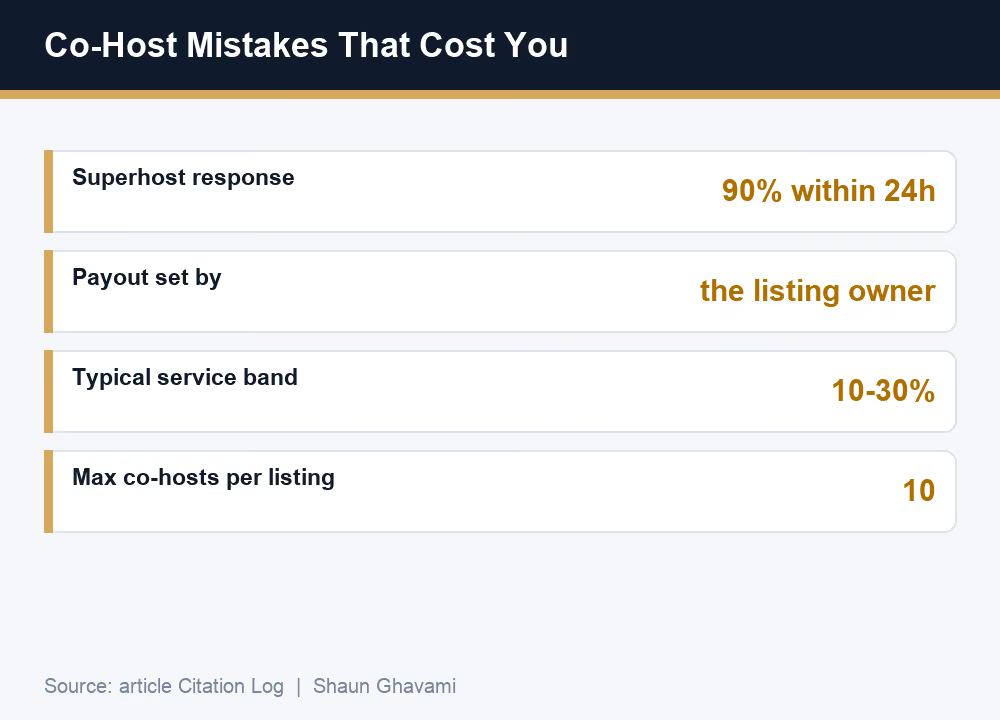
The fix: Price to scope. The industry-typical band is 10% to 30% of booking revenue, with roughly 20% common for full day-to-day management (this is a typical range, not a rate Airbnb sets, and the owner sets the actual payout per the Airbnb Help Center). If you are doing everything, charge like it. See how much Airbnb co-hosts make to anchor your rate.
Mistake 3: Taking on bad owners and bad listings
The mistake: Saying yes to anyone with a spare room, including difficult owners and listings in weak markets.
Why it hurts: A bad listing caps your income no matter how well you run it, and a bad owner drains your time with second-guessing and slow decisions. You carry the stress and earn a percentage of a small number.
The fix: Qualify before you sign. Check the market's real demand, the property's condition, and whether the owner is reasonable to work with. It is fine to say no. Learning to vet deals is part of becoming an Airbnb co-host.
Related trap: over-promising occupancy
Never promise an owner a specific occupancy or income number to close the deal. Occupancy swings with season, market, and events, and you do not control demand. Promise your process and your effort, not a percentage you cannot guarantee. If you want a benchmark, pull your own market's numbers from a source like AirDNA rather than quoting a figure from memory.
Want to skip the expensive lessons?My free class walks through vetting owners, pricing the deal, and setting up systems before you scale. Get the free Airbnb co-hosting training.
Mistake 4: No cleaning and turnover system
The mistake: Booking cleaners ad hoc, with no checklist, no backup, and no standard for what "clean" means.
Why it hurts: Turnovers are where reviews are won or lost. One dirty bathroom or a missed same-day turnover becomes a bad review, and a few bad reviews sink your pricing and your occupancy. Cleaning is also where owners quietly lose trust in a co-host.
The fix: Build a repeatable turnover system: a written cleaning checklist, a primary cleaner, a backup cleaner, and a photo-verified standard. Bake the cleaning fee into the pricing so it is covered. My guide on how to run an Airbnb business covers turning this into a routine.
Mistake 5: Slow or weak guest communication
The mistake: Treating messages as something you get to when you get to it.
Why it hurts: Response speed drives bookings, reviews, and your standing on Airbnb. The Superhost standard is a 90% response rate to new messages within 24 hours, per the Airbnb Help Center, and guests booking tonight will pick the host who replied first. Slow replies cost real money.
The fix: Set up saved replies and automated messages for the predictable moments (booking confirmation, check-in instructions, mid-stay check, checkout). Automation handles the routine so you can be fast and human on the exceptions. See Airbnb message automation for the setup.
Mistake 6: Scaling before your systems are ready
The mistake: Signing your third and fourth owner while you are still running the first two out of your inbox and memory.
Why it hurts: Chaos multiplies. What is manageable for one listing becomes dropped messages, missed turnovers, and unhappy owners across four. You can add doors fast (a listing can have up to 10 co-hosts, per Airbnb's Help Center), but adding doors without systems just multiplies the mess.
The fix: Systemize on your first listing. Checklists, automated messages, a cleaner bench, and a simple tracker. Only add the next owner once the current ones run without you touching every detail.
Mistake 7: Leaving insurance and liability vague
The mistake: Assuming someone else's coverage has you handled, and never discussing what happens when something goes wrong.
Why it hurts: Damage, an injury, or a large refund with no clear responsibility turns into a dispute with the owner right when trust matters most. Vague coverage is a risk you find out about at the worst possible time.
The fix: Talk about coverage and responsibility before you start, and get it in writing alongside the rest of the agreement. Confirm what the owner carries, understand your own exposure, and speak with a qualified insurance professional for your situation rather than guessing. Keep this general in your own head until you have real advice, because the wrong assumption is expensive.
The mistakes at a glance
MistakeThe fixNo written agreementDefine scope, rate, and payment before booking oneUndefined percentage baseName which number the % applies to in writingUnderpricing your servicePrice to scope inside the 10-30% bandBad owners and listingsVet the market, the property, and the owner firstOver-promising occupancyPromise process, not a guaranteed numberNo cleaning systemChecklist, primary and backup cleaner, photo standardSlow guest repliesAutomate routine messages, aim above the Superhost barScaling too earlySystemize on listing one before adding ownersVague insurance/liabilityClarify coverage in writing; get professional advice
Avoid these nine and you are ahead of most new co-hosts. If you are still setting up, the pillar guide on how to start an Airbnb business puts co-hosting in the wider context of building short-term rental income.
Do it right from day one.Get my full co-hosting system: vetting owners, agreements, pricing, and the automations that keep guests happy. Get the free Airbnb training.
Frequently asked questions
What is the biggest Airbnb co-hosting mistake?Starting without a written agreement. When scope, rate, and payment are only verbal, the first disagreement turns into an argument and you often end up working for free. Put the deal in writing before the first booking, and define exactly which number your percentage applies to.
How do new co-hosts usually underprice themselves?They quote a low rate like 8% or 10% to win the owner, then find out the job is full-service management. The industry-typical band is 10% to 30% of booking revenue, with about 20% common for full day-to-day work. Price to the scope you are actually doing, because raising your rate later is much harder.
Which number does the co-host percentage apply to?Whatever you and the owner define in the agreement. Booking subtotal, host payout, and the total the guest paid are different numbers because Airbnb's service fees sit between them. Name the exact base in writing so there is no confusion when payouts land.
How fast do co-hosts need to reply to guests?Fast. Airbnb's Superhost standard is a 90% response rate to new messages within 24 hours, and in practice guests book the host who answers first. Use saved replies and automated messages for the routine moments so you can respond quickly and still sound human.
Should co-hosts promise owners a specific occupancy?No. Occupancy swings with season, market, and demand you do not control, so a guaranteed number sets you up to fail. Promise your process and your effort instead, and pull real market data for a realistic benchmark rather than quoting a figure from memory.
When is it safe to take on more listings?Once your systems run without you touching every detail. If checklists, automated messages, a cleaner bench, and a simple tracker are in place on your first listing, you can add the next owner. Scaling before that just multiplies dropped messages and missed turnovers.

.png)

Be Part of our Community.
Let’s transform properties into powerhouses.
