
July 20, 2026
How to Increase Airbnb Bookings
By Shaun Ghavami

To increase Airbnb bookings on a listing that already gets a few, work in priority order instead of changing everything at once. Refresh your cover photo and title first, correct your nightly price against live comparable listings, open more of your calendar and loosen your minimum-night rule, answer messages fast, and turn on Instant Book. Then read your own view-to-booking numbers to find the single bottleneck that is costing you reservations. Most stalled listings are a price or photo problem, not a demand problem, so start where the money is and change one big lever at a time.
I have hosted more than 3,000 guests and managed a portfolio worth over $100 million in property for other owners, and the pattern almost never changes. When a listing goes quiet, the owner assumes the market dried up. Nine times out of ten it is the first photo, the price, or a calendar rule quietly blocking the exact dates people are searching for. This is the order I actually fix things in, highest impact first.
Find your bottleneck before you change anything
Your listing has three numbers, and each points to a different fix. Impressions are how often you show up in search. Views are the clicks you get from those impressions. Conversion is the share of views that turn into a booking. Airbnb's host dashboard shows your views and how you compare to similar listings, so you can see which number is weak.
If impressions are low, the issue is usually price, availability, or ranking. If you get impressions but few views, your cover photo, title, or price is losing the click. If you get plenty of views but few bookings, the problem is price, reviews, or a policy like minimum nights. Diagnose first, then spend your effort where it actually moves the needle. If you want to know whether your numbers are genuinely low or normal for your area, benchmark them with my guide to Airbnb occupancy rate.
Here is the math that makes conversion worth chasing (an illustrative example, not a market figure). Say your listing drew 600 views last month and turned into 6 reservations, roughly a 1% view-to-book rate. Lift that rate to 1.5% and the same 600 views become 9 reservations, a 50% jump in bookings with zero extra traffic. Traffic is expensive. Conversion is nearly free.
FixEffortWhy it moves bookingsCover photo + titleLowDecides your click-through rate in searchPrice vs live compsLowFirst thing a guest comparesOpen calendar + minimum nightsLowRemoves silent blocks on searched datesFast response + Instant BookMediumHelps ranking, conversion, and SuperhostReviews + amenitiesOngoingBuilds trust that closes the booking
Fix the cover photo, title, and first line
The cover photo is the single biggest lever on whether anyone clicks. Shoot your best room in daylight, wide and bright, and set that as the first image. Guests scroll a grid of thumbnails, so a dark or cluttered cover loses before the price is ever read.
Your title should lead with the standout feature and the location, not generic words. The first line of your description should answer why someone should book here over the ten listings next to yours. If your photos feel flat, the fix is staging, not a new camera. My notes on Airbnb interior design ideas cover the styling that photographs well, and the best Airbnb amenities guide tells you which features are worth putting in the first three photos.
Price against live comps, then let software adjust
Price is the first thing most guests compare, so it has to be right before anything else can help. Pull five to ten genuinely comparable active listings for your exact dates, same bedroom count, same neighborhood, similar quality, and set your rate inside that band rather than at your wish price.
Remember the guest does not see your nightly number in isolation. Airbnb adds a guest service fee on top, commonly around 14.1% to 16.5% of the booking subtotal, so a listing set at $150 a night can read closer to $170 at checkout (Airbnb service fees). Price with that total in mind. A dynamic pricing tool then moves your rate by day of week and season so you are not stuck at one flat number all year. For the full method, see how to price your Airbnb.
Want the exact system I use to turn a stalled listing into a steady booking machine?Get the free Airbnb training and I will walk you through the levers in order.
Open the calendar and loosen your minimum nights
A closed calendar and a stiff minimum-night rule are the two most common silent booking-killers I find. Hosts block days out of habit, keep a 3-night minimum on midweek dates that only get 1 or 2-night requests, and then wonder why the calendar sits empty.
More bookings mean more moving parts, so build the systems described in the automated Airbnb course before the volume arrives.
Open the dates you can actually service. Loosen minimum nights on soft midweek periods, allow short gap-fillers between longer stays, keep your calendar synced if you list on more than one platform, and set a realistic prep buffer instead of padding every stay with blocked days. Every date you block is a date that can never book.
Answer fast and turn on Instant Book
Fast replies and Instant Book help you in two ways at once: they convert more of the inquiries you already get, and they support your placement in search. Both also feed Superhost status, which puts a trust badge on your listing.
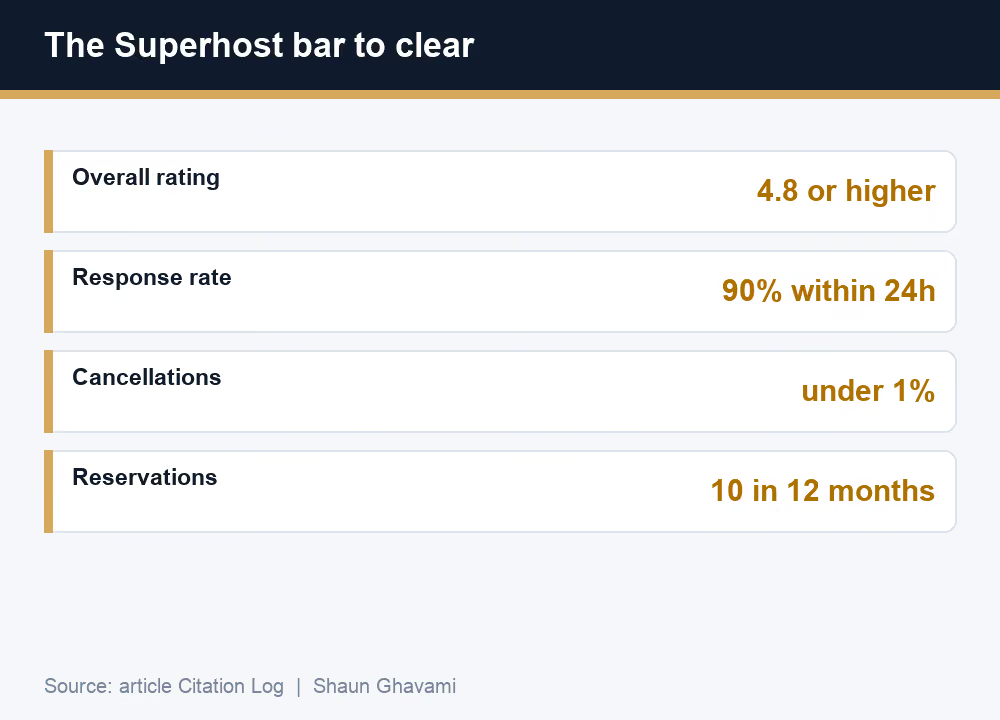
Airbnb assesses Superhost every three months over the trailing 12 months. The bar is a 4.8 or higher overall rating, a 90% response rate to new messages within 24 hours, a cancellation rate under 1%, and at least 10 completed stays (or 3 stays totaling at least 100 nights). Those criteria come straight from Airbnb's Superhost program. You do not need to live in the app to hit them. Saved replies and scheduled messages keep your response time low automatically, which is exactly what my guide to Airbnb message automation is built around.
Stack reviews and add the amenities that convert
Review velocity matters more than a flawless score. A steady stream of recent 5-star reviews tells both the guest and the algorithm that this place delivers. Ask every guest for a review, make checkout painless, and fix small complaints the same day so they never reach the public rating.
Certain amenities close bookings because guests filter for them: fast wifi, self check-in, a real workspace, free parking, air conditioning, and a well-equipped kitchen. Adding one amenity your comps lack can move you ahead of them in filtered searches. The best Airbnb amenities list ranks the ones that pull the most weight.
Earning the badge covered in Airbnb Guest Favorite status is one of the more durable ways to lift visibility.
Run seasonal promotions and read real demand
Promotions fill the soft dates that optimization alone cannot. Use the new-listing and last-minute discounts to build early momentum, add weekly and monthly discounts to attract longer stays, and set length-of-stay pricing so a 5-night guest is a better deal than a 2-night one.
Before you blame the market, check it. AirDNA's 2026 outlook describes steady guest demand with much slower new-supply growth than the 2021 to 2022 boom (AirDNA 2026 outlook). In most markets the demand is there, so the lever is your listing, not the economy.
When it is not an optimization problem
This playbook is for a listing that already gets some bookings and wants more. If your listing is brand new with zero reviews, you have a cold-start problem instead, and the moves are different: pricing to buy your first stays, casting a wide net, and earning that first batch of reviews. I cover that case in how to get your first Airbnb booking.
Once you are past the cold start, the work becomes a monthly habit rather than a one-time fix. Check your three numbers, fix the weakest, and repeat. If you are treating your listing as a real business rather than a side gig, my guides on how to run an Airbnb business and the full how to start an Airbnb business pillar show how the pieces fit together over a season.
Ready to build real Airbnb income, with or without owning the property?Get the free Airbnb training and see the system I used to host 3,000+ guests.
A steady flow of bookings also feeds the rating and response numbers behind Superhost status, so the two goals reinforce each other.
Once you are managing more than one listing, or one from a distance, how to manage an Airbnb remotely covers the systems that keep it running without you on site.
Frequently asked questions
Why is my Airbnb not getting bookings?Usually one of three things: your price sits above live comps for your dates, your cover photo is not earning the click, or a calendar or minimum-night rule is blocking the dates people search. Check your views versus bookings first. Low views point to photo, price, or ranking, while high views with few bookings point to price, reviews, or policies.
How do I improve my Airbnb occupancy rate?Fix conversion before you chase traffic. Match your price to comparable active listings, open your calendar, loosen minimum nights on soft dates, and answer messages fast. Then add seasonal and length-of-stay discounts to fill the gaps. Track your view-to-booking rate every month so you can see which change actually moved it.
Does Instant Book get you more bookings?Often yes. Instant Book removes a step for the guest and tends to help your placement in search, and it supports Superhost status. If you are nervous about it, keep guest requirements switched on, such as verified ID and prior good reviews, so you still control who can book instantly.
How fast do I need to respond to Airbnb messages?Aim to reply within an hour during the day and within 24 hours without exception. Airbnb's Superhost program requires responding to 90% of new messages within 24 hours, and faster replies convert more inquiries into bookings. Saved replies and scheduled messages keep your response time low without living in the app.
How long does it take to increase bookings after I make changes?Photo and price changes can move bookings within days because they affect click-through and conversion right away. Ranking and review-driven gains take longer, often a few weeks to a couple of months. Change one big lever at a time so you can tell what actually worked.
Should I lower my price to get more bookings?Only if your price sits above comparable active listings for your dates. If it does, a correction usually books faster than any other single change. If your price is already at market and bookings are slow, the problem is more likely your photos, calendar, or reviews, so fix those before you cut any further.
.png)

Be Part of our Community.
Let’s transform properties into powerhouses.
