
July 20, 2026
How to Become an Airbnb Superhost
By Shaun Ghavami

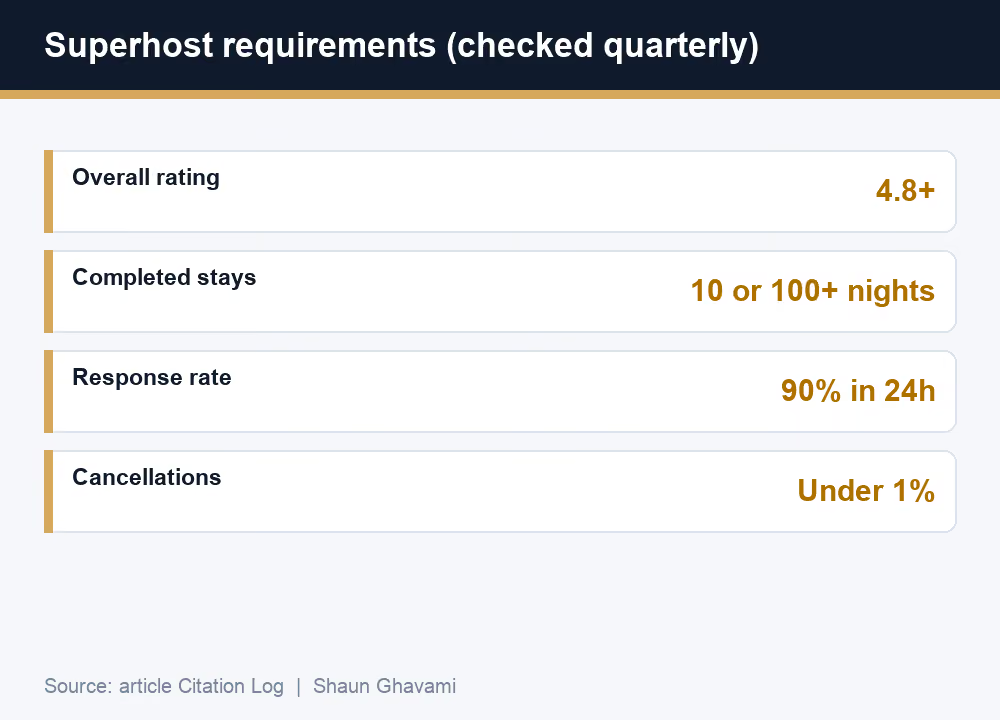
Becoming an Airbnb Superhost comes down to hitting four numbers over your trailing 12 months of hosting: a 4.8 or higher overall rating, at least 10 completed reservations (or 3 reservations that total 100 or more nights), a 90% response rate to new messages within 24 hours, and a cancellation rate under 1%. Airbnb checks every host against these on the first day of January, April, July, and October. Meet all four on an assessment date and the badge is added to your profile on its own. There is no application to fill out.
I started with a $65-a-night spare bedroom and I hold Superhost today, after hosting more than 3,000 guests and earning over a thousand 5-star reviews. None of that came from a trick. It came from doing four ordinary things on repeat. Below I break down each requirement and the exact habits I use to keep them green quarter after quarter. If you are still setting up, read my guide on how to start an Airbnb business first, then come back to lock in Superhost.
What a Superhost badge actually does
Superhost is Airbnb's public marker for hosts with a strong track record. Once you qualify, the badge shows on your listing and your profile, guests can filter search results to Superhosts only, and a strong host record helps you stand out on a busy search page. I keep the framing simple: the badge is trust you earned, shown to guests at the exact moment they are deciding. It does not change the fees Airbnb charges. It changes how many of the people who see your listing feel safe booking it.
The Airbnb Superhost requirements for 2026
Here are the four thresholds, plus the review schedule. These come straight from Airbnb's Superhost program requirements, and I have not rounded or changed any of them.
RequirementThresholdWhat it meansOverall rating4.8 or higherYour average review score across the trailing 12 monthsCompleted reservations10 completed, or 3 totaling 100+ nightsEither path qualifies youResponse rate90% within 24 hoursReply to at least 90% of new messages inside a dayCancellation rateUnder 1%Host cancellations (Major Disruptive Events excepted)AssessmentEvery 3 monthsJanuary 1, April 1, July 1, October 1, looking back 12 months
Two details people miss. First, the 10-reservation bar has an alternate path: 3 reservations that total at least 100 nights also qualifies, which suits hosts who take long stays. Second, the cancellation rule has exceptions for Major Disruptive Events and other valid reasons Airbnb recognizes, so a cancellation forced on you by a covered event does not automatically sink your record.
How to protect a 4.8 or higher rating
The rating is the requirement most hosts lose. At 4.8 you have almost no cushion, and the math is unforgiving on a young listing.
Example: with 20 reviews, nineteen 5-star stays and one 3-star stay average 4.9. Add a second 3-star stay and you are at 4.8 with zero room to spare. Those figures are illustrative, but the pattern is real: a single rough stay hurts far more when your review count is low. Early on you protect the rating by removing reasons to score you down.
In practice that means three things. Make your listing match reality so nobody arrives disappointed. Keep the place genuinely clean, using a repeatable turnover routine like the one in how to clean an Airbnb. And stock the amenities guests actually rate you on, like fast wifi, a comfortable bed, and a well-equipped kitchen. Fix any problem the moment a guest raises it, while they are still in the stay, because a saved stay is usually a 5-star stay.
A repeatable system for earning 5-star reviews and clear checkout instructions both help protect that number stay after stay.
How to hold a 90% response rate within 24 hours
This one is pure systems. Airbnb wants you replying to at least 90% of new messages within a day, and the easiest way to beat that is to make replying take seconds instead of minutes.
Holding that standard consistently is far easier with systems doing the repetitive work, which is the subject of my automated Airbnb course.
Set up saved message templates for your most common questions, turn on Airbnb quick replies and scheduled messages, and keep push notifications on your phone so a new inquiry never sits. Self check-in cuts the day-of question volume too: Airbnb lets you hand off access with a smart lock, keypad, lockbox, building staff, or a key handoff, per its self check-in guide, so guests stop messaging to ask how to get in. If you host at any real volume, build this into a repeatable routine the way I describe in how to run an Airbnb business, and lean on Airbnb message automation so no message slips past the 24-hour line.
A set of guest communication templates makes this even easier, and it is especially useful once you are managing an Airbnb remotely and cannot rely on being on site to catch a message quickly.
The four numbers are simple, but holding them across dozens of stays is a system. Want the exact playbook I use to keep listings Superhost-qualified every quarter? Get the free Airbnb training.
How to keep your cancellation rate under 1%
Host cancellations are the fastest way to lose the badge, because the bar is under 1% and a small account has no room. Example: on 30 completed stays, one host cancellation is about 3.3%, well over the line; on 150 stays, that same single cancellation is about 0.67%. Those numbers are illustrative, but the lesson holds: volume protects you, and until you have it, the rule is simply do not cancel.
The way to never cancel is to never accept a booking you cannot honor. Keep your calendar synced across every platform you list on, block dates instead of taking a reservation you might have to pull, and set your availability and pricing so you are never tempted to drop a cheap booking for a better one later. If a genuine emergency hits, remember Airbnb excepts cancellations tied to Major Disruptive Events and other valid reasons, so use the proper path rather than a plain host cancel.
Superhost is not the only badge worth chasing, and I explain the other one in Airbnb Guest Favorites.
A clear plan for preventing Airbnb parties also protects your cancellation rate, since a party gone wrong is one of the fastest ways to end up cancelling a later booking to deal with damage.
How to reach 10 completed stays (or 100 nights)
You cannot qualify until you have completed at least 10 reservations, or 3 reservations totaling 100 or more nights, so early on the whole game is filling the calendar. Price to win the first bookings rather than to squeeze each night: a new listing with no reviews competes on price and convenience, not reputation. My full method is in how to price your Airbnb, and if you are chasing booking number one right now, I wrote a step-by-step in how to get your first Airbnb booking.
Open a wide availability window, turn on Instant Book so ready guests can book without waiting on you, and reply fast so no lead goes cold. Once the reviews start landing and the badge is in reach, shift from filling the calendar to raising revenue per stay, which I cover in how to increase your Airbnb bookings. If you are weighing whether the whole effort pays off, I lay out the numbers in is Airbnb still profitable.
When Airbnb checks, and what happens if you slip
Airbnb runs the assessment four times a year, on January 1, April 1, July 1, and October 1, and each time it looks back over your trailing 12 months. If you meet all four requirements on one of those dates, you get or keep the badge. If you fall short on any single one, you lose it until the next quarterly check, when Airbnb reviews the last 12 months again.
The practical read: nothing is permanent in either direction. A rough quarter can cost you the badge, and a clean one can win it back. I treat the four numbers like a dashboard I glance at every week, so I am never surprised on an assessment date. Fix a slipping metric while there is still time in the window, not after the badge is already gone.
I built my Superhost record the same way I teach it, without owning most of the properties I manage. If you want to build Airbnb income from systems rather than luck, get the free Airbnb co-hosting training.
Value is one of the six categories guests rate, and getting it right often starts with getting the cleaning fee right so it matches what the stay actually delivers.
Frequently asked questions
How long does it take to become an Airbnb Superhost?There is no fixed timeline, because the real gate is completing at least 10 reservations (or 3 reservations totaling 100 or more nights) and holding your rating, response rate, and cancellations through a full quarterly assessment. Many hosts reach it within their first year once bookings come steadily. Airbnb runs the check on January 1, April 1, July 1, and October 1.
Do you have to apply to become a Superhost?No. There is no application and nothing to submit. Airbnb checks every host automatically on the four quarterly dates and adds the badge to your profile if you meet all four requirements over the trailing 12 months. If you qualify, it appears on its own.
What happens if I lose Superhost status?If you drop below any requirement on an assessment date, you lose the badge until the next quarterly check, when Airbnb reviews your trailing 12 months again. You requalify by getting your rating, response rate, cancellations, and completed stays back above the thresholds. Nothing is permanent in either direction.
Can one bad review cost me my Superhost badge?It can if your review count is low, because your rating has to stay at 4.8 or higher. On a small account a single 3-star review can pull your average under the line, while a host with a hundred stays has far more cushion. The fix is steady volume plus listings that match reality, so no single stay decides it.
What counts toward the 90% response rate?Airbnb measures how many new messages and booking requests you answer within 24 hours, and you need to reply to at least 90% of them that fast. Saved templates, quick replies, and phone notifications make this easy to hold. A co-host who covers your off-hours helps too.
Do Superhosts pay lower Airbnb fees?No. Superhost is about visibility and trust, not a discount, and the host service fee still applies the same way. The value is standing out to guests and converting more of the people who see you, not a change to what Airbnb charges.
.png)

Be Part of our Community.
Let’s transform properties into powerhouses.
