
August 5, 2026
Airbnb Checkout Instructions That Guests Actually Follow
By Shaun Ghavami
Good Airbnb checkout instructions are short, specific, and capped at about five asks: bag the trash, load and start the dishwasher, put the keys back where you found them, close the windows and lock the door, and message the host if anything broke. Send that list as a message the evening before checkout, keep the same five lines on a small card in the unit, and store a plain version in your listing's house manual. Everything past those five items (stripping beds, running laundry, vacuuming) belongs to your cleaner. The shorter your list, the more of it gets done.
I manage a portfolio worth over $100 million for other owners and have hosted more than 3,000 guests, so I have watched a lot of people leave a lot of apartments. Departure is the part most hosts write like a chore chart, then wonder why half of it gets ignored. This guide is departure only. The arrival side lives in my Airbnb self check-in guide, and the two should stay separate so neither gets skimmed.
Checkout instructions are a cost lever, not a politeness note
Two things ride on your checkout list, and neither is manners. The first is money. Every task a guest skips, your cleaner does, and your cleaner bills you for time. Trash left in the kitchen bin means a dumpster trip before the real work starts, and a sink of dirty dishes can eat a chunk of a same-day turnover slot. That is why the cleaning fee exists, and why your asks and the number on your Airbnb cleaning fee should be set together.
The second is your rating. Checkout is the last thing a guest experiences before the review form opens, and Airbnb gives guests and hosts 14 days after checkout to write that review. Someone who spent the last twenty minutes of a vacation doing housework fills in that form in a different mood than someone who dropped the keys and left. Airbnb also collects a separate value rating alongside cleanliness, accuracy, check-in, communication, and location, and value is where a chore list quietly shows up.
Those stars are not cosmetic. Superhost status requires a 4.8 or higher overall rating over the trailing twelve months, and ratings also feed how your listing places in search, which I break down in how the Airbnb algorithm works.
How many asks is too many
My cap is five. Six on a large home with a hot tub or a gated garage, never more.
That number is my own operating rule from running turnovers, not an Airbnb policy and not a published statistic. Under about five items, compliance is high and nobody comments on it. Past that, the completion rate on the whole list drops rather than just the last item, and the phrase "felt like a hotel with chores" starts appearing in private feedback. Guests do not weigh a checkout list task by task. They read its length, decide whether it feels fair for what they paid, and act on that.
Every line looks reasonable on its own, which is the trap. Ask one question of each: does this save my cleaner real minutes, prevent a real cost, or protect the next guest? If not, it is decoration.
The asks worth making, and the ones to drop
This is the split I use on nearly every property.
| The ask | Keep or drop | Why |
|---|---|---|
| Bag the trash and put it in the outside bin | Keep | Smell and pests build fast in a warm unit, and it is a 60-second job |
| Load the dishwasher and press start | Keep | Removes the biggest time sink from a same-day turnover |
| Put keys, fobs, and remotes back where you found them | Keep | A missing fob means a rekey and a late check-in for the next guest |
| Close windows, turn off the AC or heat, lock the door | Keep | Security and the utility bill, in one line |
| Message me if something broke or spilled | Keep | Gives you hours to fix it instead of hearing it from the next guest |
| Strip the beds | Drop | Cleaners handle linens anyway, and guests pile them where a stain hides |
| Start a load of laundry | Drop | You are leaving a machine running in an empty home |
| Sweep, vacuum, or mop | Drop | This is the work the cleaning fee pays for, and guests know it |
| Sort the recycling by category | Drop | Rules vary by building and the cleaner redoes it anyway |
| Empty the fridge completely | Soften | Ask for perishables only, unopened pantry items can stay |
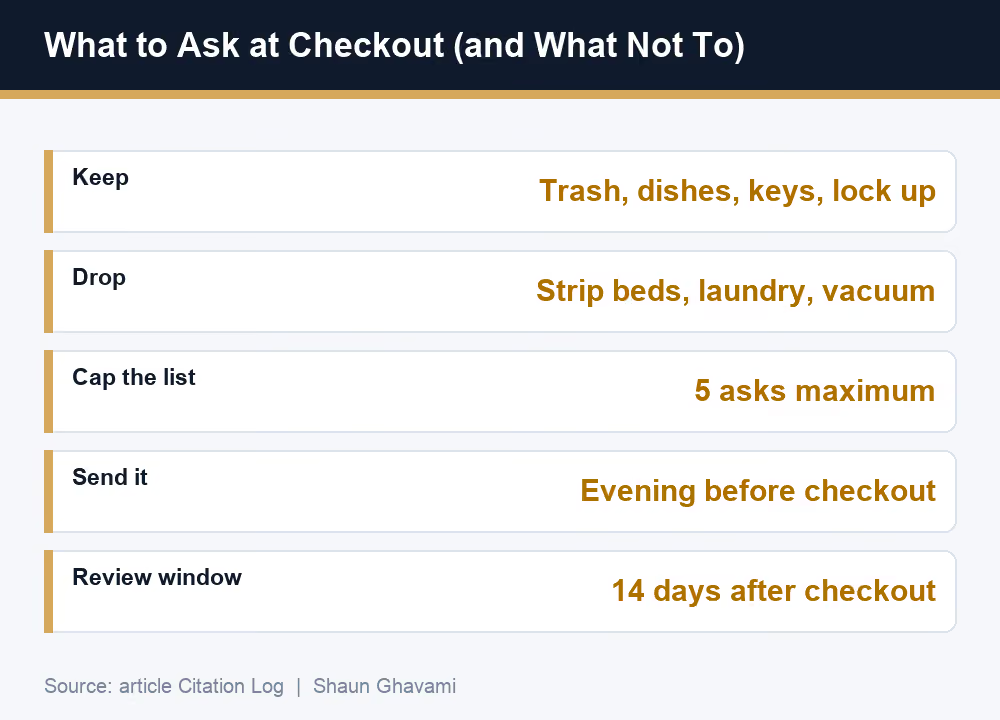
Three filters produce that keep column: under a minute, no judgment required, and nothing a guest can get wrong expensively.
The checkout message, word for word
Send this the evening before checkout, roughly 6pm local. Not the morning of, when the guest is packing and half-reading, and not three days out, when it is forgotten by the time it matters. Replace the brackets and cut anything that is not true for your place.
Hi [Name], hope the stay has been a good one.

Checkout is [11am] tomorrow. Five quick things and you are set:

1. Trash bagged and in the [bin by the side gate]
2. Dishes in the dishwasher, press start
3. Keys back [in the bowl by the door / in the lockbox, code 1234]
4. Windows closed, [AC/heat] off, door locked behind you
5. Text me here if anything broke or spilled, no charge for
   normal wear and I would rather know

Leave the rest to us, that is what the cleaning fee is for.

If you need a late checkout, ask me now and I will check the
calendar. Safe travels, and thanks for treating the place well.
Three things do the work there. The numbered list makes it feel finite, and the "leave the rest to us" line tells the guest they are not being handed a cleaning shift. The "no charge for normal wear" line is what gets damage reported instead of hidden. Save it with your other Airbnb guest communication templates rather than retyping it, and schedule it alongside the rest of your Airbnb message automation sequence.
The card in the unit
Print the same five lines, no extras, on a card and leave it in one obvious place: the kitchen counter or the back of the entry door, never inside a binder.
BEFORE YOU GO         Checkout [11am]

Trash     : bagged, [bin by the side gate]
Dishes    : in the dishwasher, press start
Keys      : back [in the bowl by the door]
Windows   : closed, [AC/heat] off, door locked
Anything broken? Text [phone] or message us in the app

That is it. We handle the rest.
Thanks for staying with us. [Host name]
The card and the message say the same five things in the same order. A card listing eight items against a message listing five means guests trust neither.
Keep the card out of your house manual. The manual is for the stay (WiFi, the coffee machine, the good taco place) and belongs in the Airbnb welcome book. The card is for the last ten minutes.
Where the instructions live, and when each one lands
The same five asks go in three places, each with a different job.
1. The listing
A plain version belongs in your listing's house manual area so a guest can find it at 10:40am without messaging you. Keep enforcement language out of it. Anything with a consequence attached (no parties, no smoking, quiet hours, extra guests) is a rule rather than a checkout task, and belongs in your Airbnb house rules.
2. The message thread
The evening-before message is what drives behavior, because it arrives while the guest is thinking about tomorrow. It also leaves a written record of what was asked.
3. The card in the unit
The card catches the guest who never reads the app, and there are more of those than you would like.
If your checkout time is unusual, say it in the booking confirmation, the pre-arrival message, and again the night before. Guests remember the number they heard first.
How this hands off to the cleaner
Your checkout list is the first step of the turnover, so write it and your cleaning checklist as one document. Every task you drop from the guest list becomes a line on the cleaner's list, and both of you should see the whole thing.
I give cleaners a fixed sequence, the same one in my how to clean an Airbnb process, plus two photos at the end of every turn, one of the made bed and one of the kitchen counter. That is evidence: it tells me whether a bad cleanliness review was the cleaner's miss or a late checkout.
I also ask cleaners to report what they find, not just what they cleaned. Trash left, dishes left, something broken, furniture moved. Three or four turns of that tells you which ask is working and which one everybody ignores, which is the only honest way to edit the list.
Standardizing checkout across a portfolio
Across more than one listing, or across listings you run for other owners as a co-host, the checkout list stops being a writing job and becomes a systems job.
Keep one master template with the five core asks, then allow a short list of approved property-specific lines: the gate code, the dumpster location, the hot tub cover, the parking pass. Left alone, every property drifts toward its own eleven-item list, usually because one bad guest triggered a rule nobody ever removed.
On owner-managed properties, agree the list in writing before the first booking and put the reasoning beside it. Owners often want to add tasks after an unpleasant turnover, and that conversation goes better against a shared document explaining why the list is short. That agreement is part of building a hosting business properly, covered in how to start an Airbnb business.
Review it quarterly against your reviews. If nobody has mentioned checkout in three months and your cleaner is not flagging anything, the list is right.
Frequently asked questions
Cap it at about five asks: bag the trash and put it outside, load and start the dishwasher, return keys and fobs to where they were, close windows and lock up, and message you about anything that broke. Each one should save your cleaner real time or prevent a real cost. Anything longer starts to read as a chore list.
Send it the evening before checkout, around 6pm local time. That is late enough for the guest to be planning tomorrow and early enough that it is not lost in the rush of packing. Repeat the checkout time in your booking confirmation and pre-arrival message too, since guests remember the first number they hear.
No. Your cleaner handles linens as part of the turnover, and guests who strip beds often bundle everything into a pile that hides a stain until wash day. Asking a departing guest to start a laundry cycle also means leaving a machine running in an empty property. Both belong on the cleaner's list, not the guest's.
In my experience running turnovers, yes, and it usually shows up in the value rating rather than in cleanliness. Airbnb collects value as its own category alongside cleanliness, accuracy, check-in, communication, and location. That is my own operating observation rather than a published Airbnb statistic, but it is consistent enough that I treat five asks as a ceiling.
Use three places for the same five asks: a plain version in your listing's house manual so guests can find it in the app, the evening-before message in the thread, and a printed card in the unit. Keep enforcement items like no parties or quiet hours in your house rules instead. Say the same thing in the same order in all three.
Treat checkout asks as requests, not fees. Chasing small charges for a bagged trash can costs you far more in reviews than the cleaner's extra ten minutes costs in cash. Save formal claims for actual damage, and keep your checkout message friendly enough that guests tell you when something breaks instead of hiding it.

.png)

Be Part of our Community.
Let’s transform properties into powerhouses.
