
July 20, 2026
Airbnb Co-Hosting vs Property Management: What Is the Difference?
By Shaun Ghavami

Airbnb co-hosting and short-term rental property management do the same core job, running someone else's listing well, but they differ in structure, control, cost, and scale. A co-host is added directly to the owner's Airbnb listing, and Airbnb allows up to ten co-hosts per listing, while the owner keeps the account and sets the payout, commonly a share of booking revenue in the 10% to 30% range. A full-service property manager usually runs the property under its own systems and a formal contract, often charges more or a flat monthly fee, and typically carries more licensing weight. Co-hosting is the lighter-touch, lower-capital way to start as an operator; property management is a bigger operation with more overhead and more control.
I have run both sides of this. I manage a portfolio worth over $100 million for owners who keep their own names on the deeds and their own accounts on the listings, and I co-founded a Vancouver management company. So I can tell you where the line actually sits: not in theory, but in how the money, the accounts, and the liability really move. Whether you are an owner choosing which model to hire, or an operator choosing which business to build, here is the honest comparison. If you are brand new to the terms, my explainer on what Airbnb co-listing is sets the baseline.
The short answer
Think of it as a spectrum of control. A co-host works inside the owner's world: same account, same payout settings, an agreed cut, and a scope that can be as light as guest messaging or as heavy as running the whole listing. A property manager builds its own world around the property: its own systems, its own contract, often its own listing across several booking channels, and usually a bigger fee to match the bigger operation.
Neither is better in the abstract. The right choice depends on how much control the owner wants to keep and how large an operation the operator wants to run. The rest of this guide breaks the difference down factor by factor.
Who holds the Airbnb account and the contract
This is the cleanest dividing line, so start here. With co-hosting, the owner keeps the Airbnb account and adds the co-host to the existing listing. The owner still controls how the co-host is paid, and per the Airbnb Help Center, a single listing can have up to ten co-hosts. Nothing about the owner's account or ownership changes; a co-host simply gets permission to help run it.
Property management often works the other way. Many managers run the property under their own systems and their own booking accounts, sometimes listing the same unit across several channels at once. The relationship is set by a formal management contract rather than an in-app co-host invite, and that contract usually runs longer and covers more, including insurance, maintenance, and how either side can exit.
If you want to see how the co-host role gets set up in practice, my walkthrough on how to become an Airbnb co-host covers the invite, the permissions, and the first-week checklist.
How the fees compare
Co-host pay is a percentage the owner sets, not a rate Airbnb dictates. The Airbnb Help Center confirms the owner controls the payout, which can be a percentage per booking, a fixed amount, or the cleaning fee, paid to the co-host after the guest checks in. The industry-typical band is about 10% to 30% of booking revenue, scaling with scope.
Property management fees usually sit higher and take a different shape. A full-service manager typically charges a larger share of revenue or a flat monthly fee, and the exact figure varies widely by company, market, and how much the manager takes on. Because the manager carries more of the operation, staffing, insurance, and sometimes a license, that cost is baked into a higher rate. I am not going to quote a single national property-management percentage here, because it genuinely varies and I will not invent a number. What holds true is the direction: co-hosting is usually the cheaper arrangement for the owner, and property management usually costs more because it does more.
Whichever side you lean toward, the underlying question is return on your time, and that is exactly what is co-hosting on Airbnb worth it covers.
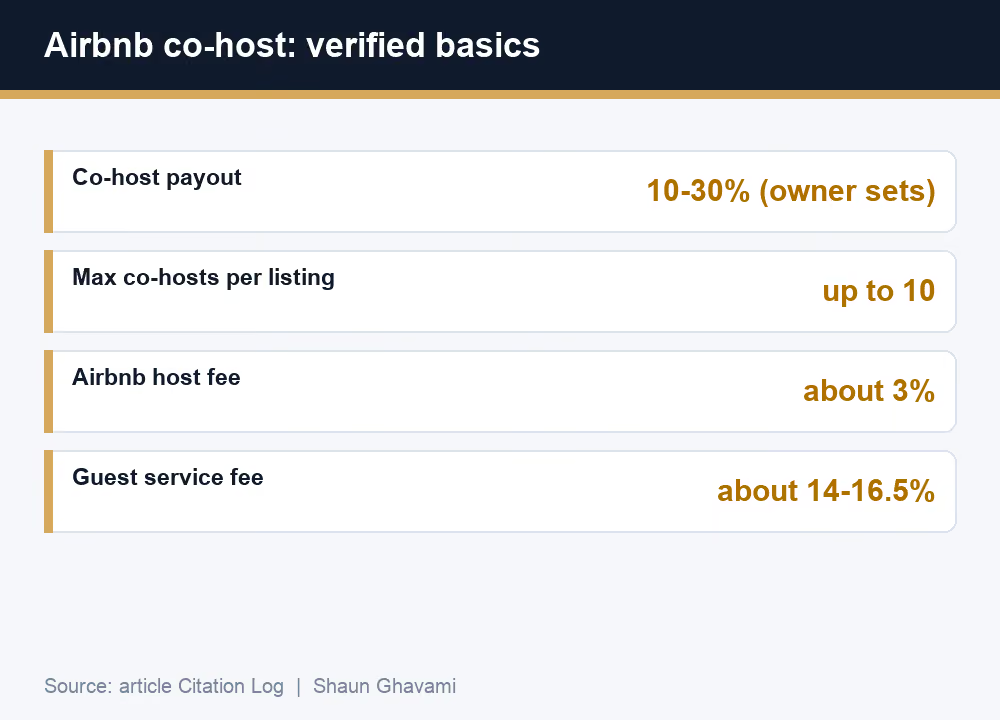
One detail owners forget: Airbnb takes its own service fees on top of any management arrangement. Under the split-fee model, the guest pays roughly 14.1% to 16.5% of the subtotal and the host side pays about 3%, per the Airbnb Help Center. For the full money math on the co-host side, see how much Airbnb co-hosts make and the mechanics in Airbnb co-host pay and fees.
Want to see the co-hosting model up close?
The free Airbnb training breaks down how co-hosts get paid and how the business runs, before you commit to either path.
.
Scope, licensing, and scale
The comparison table below lines up the two models on the factors that actually decide the choice.
FactorAirbnb co-hostProperty managerWhere they operateAdded directly to the owner's Airbnb listing (up to 10 co-hosts)Runs the property under its own systems, often across several channelsWho holds the accountOwner keeps the account and sets the payoutManager often lists and operates under its own accountsContractA simple co-hosting agreement between owner and co-hostA formal, usually longer management contractFee modelOwner-set share, industry-typical 10% to 30% of revenueTypically higher: a larger share of revenue or a flat monthly feeScopeFrom guest messaging to running the full listingFull-service operations, sometimes many units and staffLicensingOften lighter; the owner usually holds the local permitOften heavier; some places require a management or real estate licenseCapital to start (operator)Low; you run someone else's assetHigher; systems, staff, insurance, sometimes a licenseBest forOwners who want help without giving up controlOwners who want fully hands-off management
Either path still requires a pipeline of owners, and I explain how I build mine in how to win Airbnb co-hosting clients.
Licensing and regulation
Licensing is where the two diverge most by location. Co-hosting is often the lighter footprint, because the owner usually holds the short-term rental permit and the co-host operates the listing on their behalf. Full property management can trigger more: some jurisdictions require a property management or real estate license to manage properties for a fee, and many cities add short-term rental registration on top. Rules are strictly local, so check your own market rather than assuming, and if you are the owner, confirm the permit sits with the right party in writing.
Scale and which business to build
If you are deciding which business to build rather than which service to hire, scale is the deciding factor. Co-hosting lets you start lean: you can take one owner's listing, prove your process, and add more without buying property or hiring a team. That is why it is the entry point I recommend for most people, and it pairs naturally with the arbitrage question I cover in co-listing vs rental arbitrage. Full property management scales bigger but demands more up front: staff, software, insurance, and often a license. Many operators start as co-hosts and grow into full management once the volume justifies the overhead. To see the day-to-day either path requires, read how to run an Airbnb business.
Which is right for you
For an owner, the question is control versus convenience. If you want to stay involved, keep your account, and pay less, a co-host is the fit. If you want the property fully off your plate and will pay more for that, a property manager makes sense. Either way, get the scope, the fee, and the exit in writing before anyone touches your calendar.
For an operator, the question is how big you want to go and how soon. Co-hosting is the low-capital way in, and you can build real income from listings you do not own. If you want to understand the ownership path too, my guide on how to become an Airbnb owner covers that side, and the pillar how to start an Airbnb business shows where each model fits in the wider plan.
Not sure which path to build?
Start with the model that needs the least capital. The free Airbnb training shows how co-hosting works end to end so you can decide with real numbers.
.
Frequently asked questions
What is the difference between an Airbnb co-host and a property manager?A co-host is added to the owner's existing Airbnb listing, works inside the owner's account, and takes an owner-set share of revenue. A property manager usually runs the property under its own systems and a formal contract, often across several booking channels, and charges more. In short, a co-host helps the owner run the listing, while a manager takes the whole operation off the owner's plate.
Is Airbnb co-hosting cheaper than property management?Usually yes, because a co-host does less and carries less overhead. Co-host pay is an owner-set share, industry-typical around 10% to 30% of revenue, while full management typically costs more through a larger percentage or a flat monthly fee. The gap reflects that a manager handles staffing, insurance, and sometimes licensing that a co-host does not.
Who controls the Airbnb account, the co-host or the property manager?With co-hosting, the owner keeps the Airbnb account and controls the payout, and simply adds the co-host to the listing. A property manager more often operates under its own accounts and systems. That difference in account control is the clearest line between the two models.
Do property managers need a license when co-hosts do not?It depends on your location, since these rules are set locally. Some jurisdictions require a property management or real estate license to manage properties for a fee, which can apply to full managers, while co-hosts often operate under the owner's permit. Always confirm your own city's short-term rental and licensing rules before you start.
Should I hire a co-host or a property manager for my Airbnb?Choose a co-host if you want to stay involved, keep your account, and pay a smaller share. Choose a property manager if you want the property fully hands-off and are willing to pay more for that. Either way, put the scope, fee, and exit terms in writing before handing over your calendar.
Is co-hosting or property management easier to start as a business?Co-hosting is easier and cheaper to start, because you run someone else's listing without buying property or hiring a team. Full property management scales bigger but needs systems, staff, insurance, and sometimes a license up front. Many operators start as co-hosts and grow into management once volume justifies the overhead.

.png)

Be Part of our Community.
Let’s transform properties into powerhouses.
